
Marsha Sakamaki • August 13, 2026
Short notes on health, aging, and prevention.
No noise. No selling. Ever.
How daylight supports circadian timing, alertness, sleep, and outdoor activity, and why light reaching the eyes is different from sunlight reaching the skin
Light does much more than help us see. It is one of the strongest environmental signals the body uses to determine when to be awake, when to become sleepy, and when many daily biological processes should occur.
That does not mean every hour of sunlight produces a different list of health benefits. It means the effects of light depend on several factors, including its timing, brightness, duration, and the person receiving it.
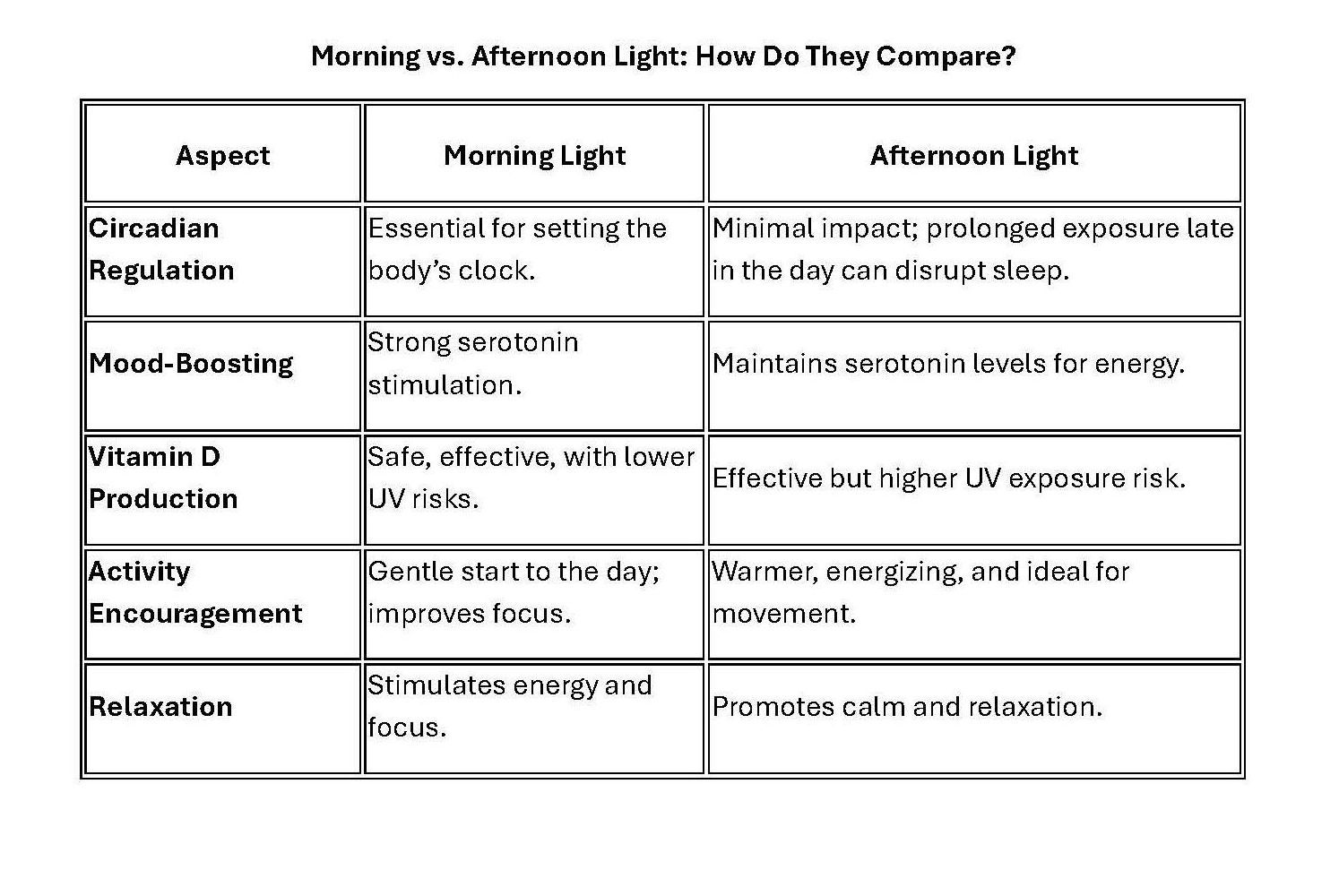
Morning and afternoon light can both be valuable, but they do not always affect the body in the same way. Understanding the difference can help us use daylight more intentionally without turning a useful habit into an overly precise prescription.
How Light Helps Set the Body’s Clock
The eyes do more than form visual images. Specialized light-sensitive cells in the retina detect environmental light and send signals to the suprachiasmatic nucleus, a small region of the brain that helps coordinate the body’s circadian rhythms.
These approximately 24-hour rhythms influence sleep and wakefulness, alertness, body temperature, hormone timing, appetite, and metabolism. Light is not the only influence. Meal timing, physical activity, and regular routines also matter. However, the daily pattern of light and darkness is one of the body’s most important timing cues.
The circadian system responds not only to whether light is present, but also to when it appears. For someone who sleeps at night and is active during the day, light near the usual waking period generally shifts the internal clock earlier. Light late in the evening generally shifts it later.
This is why morning light may help someone become sleepy earlier at night, while bright light late in the evening may make an early bedtime more difficult.
Morning Light: A Strong Signal That the Day Has Begun
Outdoor light soon after waking provides the brain with a clear daytime signal. It can increase alertness, contribute to the normal suppression of melatonin, and help anchor the timing of sleep later that night.
Morning light also interacts with the body’s normal cortisol rhythm. Cortisol typically rises around waking and peaks early in the day before declining. This normal pattern is different from persistently elevated cortisol associated with chronic stress. Light may influence the morning response, but cortisol is affected by many factors, so morning light should not be described as a guaranteed way to “boost” cortisol or energy.
The greatest practical advantage of going outdoors is brightness. Even when an indoor room looks well lit, outdoor daylight is often many times brighter. A window can provide some useful light, particularly when a person sits close to it, but going outside usually produces a stronger signal.
Direct sun is not required. Outdoor ambient daylight still reaches the eyes on cloudy days and in open shade. There is also no reason to stare at the sun, which can damage the eyes.
Can Morning Light Improve Sleep?
Morning light may help stabilize the sleep-wake schedule and move sleep timing earlier. This can be especially relevant for people who have difficulty falling asleep at night, receive little daytime light, or spend most of the morning indoors.
It is not a cure for every sleep problem. Sleep apnea, pain, medications, stress, nighttime light, irregular schedules, and other medical or behavioral factors can interfere with sleep even when morning light exposure is adequate.
What About Mood and Daytime Energy?
Bright light can increase alertness, and appropriately timed light therapy is an established treatment for seasonal affective disorder. Daylight exposure may also support mood and sleep in other circumstances, although the results vary among individuals and conditions.
Claims that a few minutes of morning sun directly “produce serotonin” or prevent an afternoon energy slump are too simple. Mood and energy are influenced by sleep, health, medications, nutrition, activity, stress, and the overall pattern of light exposure, not one pathway acting alone.
Afternoon Light: Continued Daytime Support
Morning light is particularly useful as a wake-time signal, but light exposure throughout the day also matters. Spending the entire day in dim indoor conditions may weaken the contrast between day and night that helps the circadian system remain well organized.
Afternoon outdoor light can support daytime alertness and increase total daily light exposure. It may also bring indirect benefits when it is paired with walking, gardening, social contact, or time in nature. Those benefits come partly from the activity and environment, not from a unique “afternoon wavelength.”
Timing still matters. Light earlier in the afternoon usually has less effect on shifting the circadian clock than light near the sensitive morning and evening periods. Very late-afternoon or evening light can delay sleep timing in some people. That may be useful for someone who becomes sleepy and wakes too early, but unhelpful for someone already struggling to fall asleep at night.
Afternoon light is therefore not universally energizing or relaxing. Its effect depends on the person’s internal clock, usual sleep schedule, and the timing and intensity of the exposure.
Circadian Light and Vitamin D Are Not the Same Thing
Discussions of sunlight frequently combine two different biological processes:
- Circadian effects begin when visible light reaches the retina.
- Vitamin D production begins when ultraviolet B radiation reaches the skin.
These processes may occur during the same outdoor activity, but one does not guarantee the other. Early-morning daylight may provide a strong circadian signal even when UVB is too limited for meaningful vitamin D production.
Conversely, the stronger UV exposure available later in the day may increase vitamin D production while also increasing the risk of sunburn, premature skin aging, and skin cancer.
For that reason, morning light should not be promoted as a universally safe or sufficient way to obtain vitamin D. The American Academy of Dermatology recommends obtaining vitamin D through diet, fortified foods, or supplements rather than deliberately increasing unprotected UV exposure. Anyone concerned about vitamin D status can discuss testing and appropriate intake with a healthcare professional.
How Much Morning Light Do You Need?
There is no single number of minutes that is right for everyone. The biological effect depends on the amount of light reaching the eyes, and that varies with:
- Time of day
- Season and latitude
- Cloud cover and weather
- Open sky, shade, or indoor exposure
- Distance from a window
- Eyewear and light sensitivity
- A person’s usual waking time and sleep pattern
- Recent light exposure
A bright morning in Honolulu is not equivalent to a dark winter morning at a northern latitude. Rather than treating 20 or 30 minutes as a medical dose, it is more accurate to use it as a practical starting point that can be adjusted to the conditions and the individual’s response.
A Practical Daylight Routine
For most people who sleep at night and want to maintain a conventional daytime schedule, these habits are reasonable:
After Waking
- Open curtains and increase indoor light.
- When practical, spend some time outdoors in daylight relatively soon after waking.
- Choose open shade if the sun or heat is uncomfortable.
- Do not look directly at the sun.
- Continue using prescribed eye protection or follow the advice of your eye-care professional.
During the Day
- Avoid spending the entire day in dim indoor light when outdoor access is possible.
- Pair daylight with an activity you already value, such as walking, gardening, eating outside, or taking a brief break.
- Remember that movement and time outdoors may contribute benefits separate from light itself.
Later in the Evening
- If falling asleep is difficult, reduce bright overhead lighting and intense screen exposure as bedtime approaches.
- If you routinely become sleepy or wake much earlier than desired, the timing of light may need to be adjusted differently. Persistent circadian or sleep problems may warrant professional guidance.
Sun and Eye Safety Still Matter
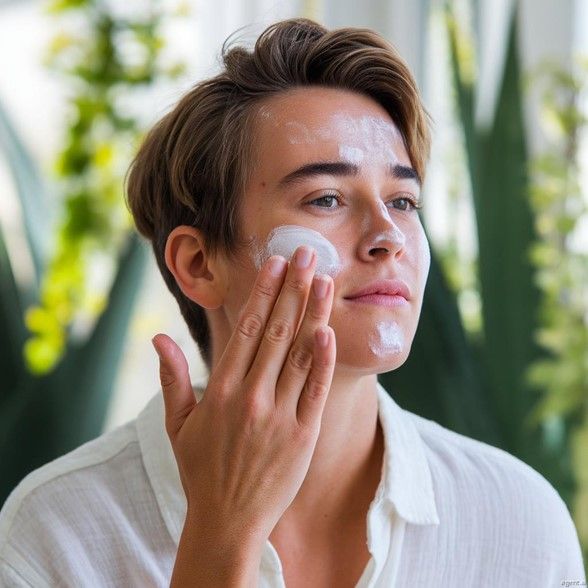
Beneficial light exposure does not require intentional sunburn or prolonged unprotected UV exposure. Check the local UV index, seek shade when appropriate, use protective clothing and sunscreen, and follow medical advice related to photosensitive conditions or medications.
Sunglasses reduce the amount of visible light reaching the eyes, but that does not make them inappropriate. Glare, eye disease, prior procedures, medications, and individual sensitivity may make eye protection necessary. General circadian advice should never override personalized guidance from an eye-care professional.
The Larger Lesson: Build a Strong Day-Night Contrast
The most useful principle is not that morning light is “good” and afternoon light is “better” or “worse.” It is that the body benefits from receiving recognizable daytime and nighttime signals.
For most daytime-oriented people, that means brighter light after waking and during the day, followed by progressively dimmer conditions as bedtime approaches. Morning exposure can help anchor the clock. Afternoon exposure can strengthen the daytime signal and encourage activity. Darkness at night completes the pattern.
Light is not a substitute for adequate sleep, medical treatment, movement, or good nutrition. It is one part of the environment that helps the body know what time it is.
Selected Sources
- Centers for Disease Control and Prevention, National Institute for Occupational Safety and Health. “Effects of Light on Circadian Rhythms.”
- Blume C, Garbazza C, Spitschan M. “Effects of Light on Human Circadian Rhythms, Sleep and Mood.” Somnologie. 2019.
- American Academy of Dermatology. “Sunscreen FAQs.”
- O’Byrne NA, Yuen F, Butt WZ, Liu PY. “Sleep and Circadian Regulation of Cortisol: A Short Review.” Current Opinion in Endocrine and Metabolic Research. 2021.
This article is for general educational purposes and is not a substitute for individualized medical or eye-care advice.