

Guides
Halitosis: What Persistent Bad Breath May Be Telling You
What persistent bad breath may reveal, what the evidence supports, and when to seek help
Halitosis is the medical term for persistent bad breath. Almost everyone experiences unpleasant breath occasionally, perhaps after eating garlic, drinking alcohol or waking in the morning. Persistent bad breath is different. If it continues despite ordinary oral care, covering it with mints or mouthwash may hide the odor temporarily without addressing why it is happening.
Bad breath is usually produced in the mouth. It may come from bacteria on the tongue, gum disease, tooth decay, an infection or reduced saliva. Sometimes the source is elsewhere, including the nose, throat, respiratory tract or digestive system. Rarely, an unusual breath odor accompanies a serious illness affecting the body more broadly.
The useful question is not simply, “How do I make my breath smell better?” It is:
Where is the odor coming from, and what might it be telling me?
This Guide will help you investigate that question without assuming that every case signals disease or that every dramatic claim found online is true.
First, Is It Temporary or Persistent?
Temporary bad breath can result from:
- Garlic, onions, spices and certain other foods
- Coffee and alcohol
- Smoking or other tobacco use
- Going a long time without eating, fasting or following a ketogenic or very-low-carbohydrate diet
- Waking with a dry mouth
- Inadequate brushing, interdental cleaning or denture care
These odors often improve after the food or substance leaves the body, normal saliva flow returns and the mouth is cleaned. Breath changes caused by fasting or a ketogenic diet may continue while the body is producing more ketones.
Persistent bad breath repeatedly returns or remains despite ordinary care. It deserves more attention, particularly when it is accompanied by bleeding gums, tooth pain, dry mouth, mouth sores, reflux, trouble swallowing, fever, unexplained weight loss or other symptoms.
Important distinction: Bad breath is a symptom, not a diagnosis. Its presence cannot identify the cause by itself.

How Common Is Bad Breath?
A systematic review and meta-analysis estimated that halitosis affects approximately 31.8% of people, although estimates varied substantially among studies. Some researchers measured breath directly; others relied on people reporting their own breath. Different definitions and testing methods make an exact worldwide figure impossible.
The safest conclusion is simple: persistent bad breath is common, and people experiencing it are far from alone.
Its consequences can extend beyond oral health. Research associates halitosis with embarrassment, anxiety, reduced self-confidence, avoidance of close conversation and poorer oral-health-related quality of life. Those effects are one reason the subject deserves practical, respectful coverage rather than jokes or shame.
Where Does Bad Breath Usually Begin?
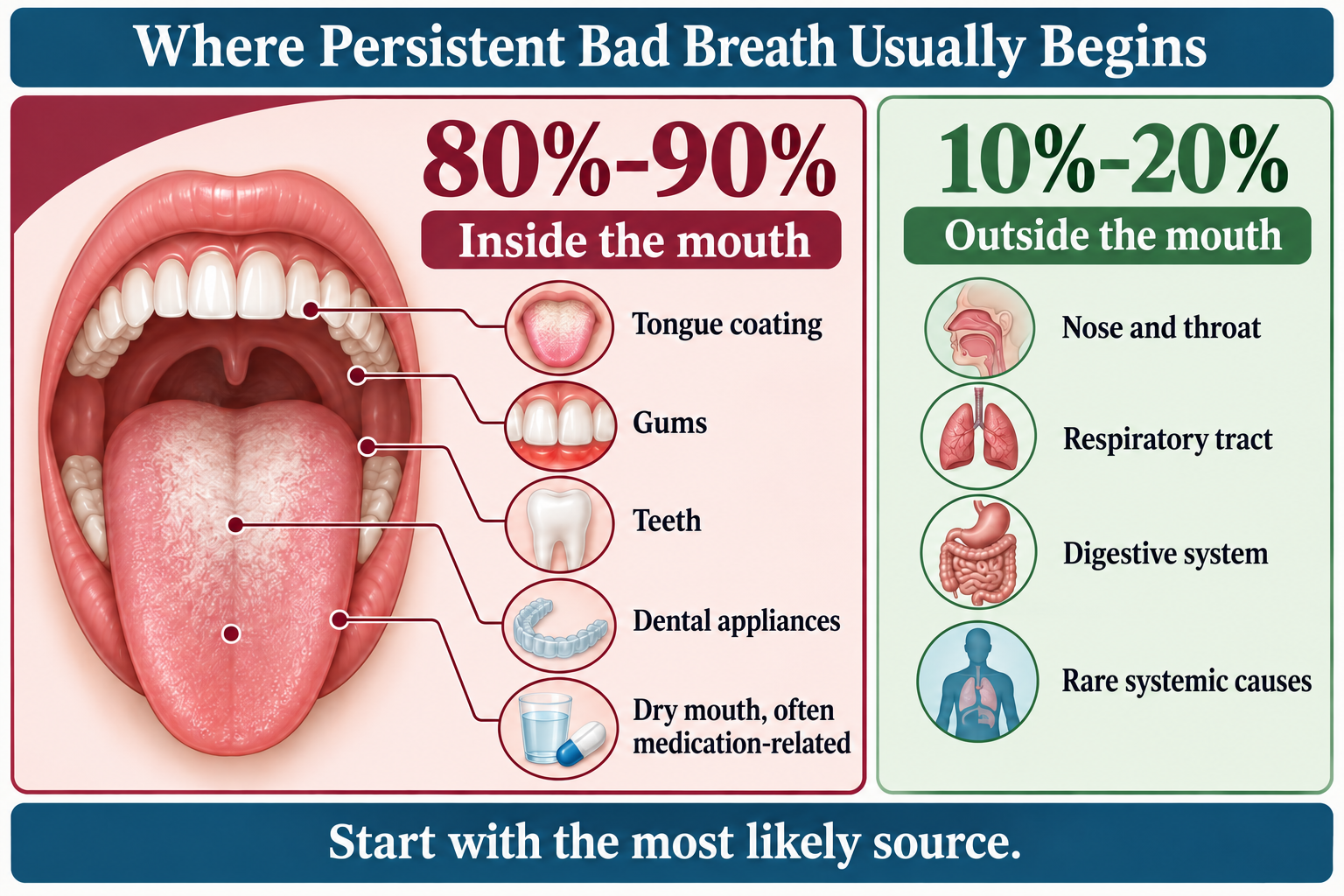
Clinical reviews and guidelines estimate that approximately 80% to 90% of persistent halitosis originates inside the mouth. Less-common sources include the nose, throat, respiratory tract, digestive system, medications and diseases affecting the body more broadly.
This does not mean that every case is caused by poor hygiene. Someone can brush regularly and still have tongue coating, deep spaces between the gums and teeth, reduced saliva, a poorly fitting dental appliance or an infection that requires professional treatment.
What Produces the Odor?
The surface of the tongue, particularly toward the back, contains grooves that collect bacteria, shed cells, mucus and food debris. Bacteria break down proteins in this material and release volatile compounds.
Several important odor-producing chemicals contain sulfur:
- Hydrogen sulfide, often compared with rotten eggs
- Methyl mercaptan, associated particularly with periodontal disease
- Dimethyl sulfide, which may be more prominent when the odor originates outside the mouth and is carried to the lungs through the bloodstream
Breath contains many other compounds as well, so measuring sulfur compounds does not detect every possible odor. This is one reason a home “breath meter” cannot provide a complete diagnosis.

The Most Common Causes Inside the Mouth
1. Tongue coating
The tongue is not smooth. Its tiny projections and grooves can retain bacteria, dead cells and other material, particularly near the back where ordinary cleaning and saliva may be less effective.
A coated tongue does not automatically mean infection, Candida or poor hygiene. Dry mouth, illness, smoking, mouth breathing and other conditions can change its appearance and bacterial environment.
2. Gingivitis and periodontal disease
Inflamed gums and deeper spaces between the gums and teeth can harbor odor-producing bacteria. Bleeding and inflammation also provide proteins that bacteria can break down. Persistent bad breath may be one sign of gum disease, especially when accompanied by bleeding, swelling, receding gums, loose teeth or discomfort when chewing.
Bad breath does not prove that periodontal disease is present, but it is a reasonable reason to obtain a dental examination.
3. Tooth decay, trapped food and dental infection
Cavities, broken teeth, poorly fitting restorations and spaces that trap food can create odor. A dental abscess may also produce a foul taste or odor and requires treatment of the infection, not merely stronger mouthwash.
4. Dentures, bridges, retainers and other appliances
Dental appliances can retain food, plaque and microorganisms. They require cleaning according to professional instructions, including areas that may not be obvious while the appliance is being worn.
5. Oral sores and abnormal tissue
Mouth ulcers, infected extraction sites and other lesions can contribute to odor. Oral cancer is a much less common explanation, but a sore, lump, thickened area, unexplained bleeding or red or white patch that does not resolve should be professionally examined.
Dry Mouth: The Overlooked Connection
Saliva does much more than keep the mouth comfortable. It helps wash away debris, buffer acids, control microorganisms and protect oral tissues. When saliva flow falls, material remains in the mouth longer and odor-producing bacteria can thrive.
Dry mouth may result from:
- Dehydration
- Aging-related changes
- Mouth breathing or nasal obstruction
- Sleep and overnight reduction in saliva
- CPAP-related dryness in some users
- Sjögren’s disease and other medical conditions
- Radiation treatment involving the head or neck
- Numerous medications
Common medication categories associated with dry mouth include some antihistamines, antidepressants, anticholinergic medicines, decongestants, pain medicines, diuretics and blood-pressure treatments. The effect varies by medication and individual.
Do not stop a prescribed medication because you suspect it is drying your mouth. A dentist, physician or pharmacist can help determine whether the medication may be contributing and whether the dose, timing, alternative medication or dry-mouth care can be adjusted safely.
Helpful measures may include frequent water intake, addressing nasal obstruction, sugar-free gum or lozenges when appropriate, saliva substitutes and professionally recommended oral-care products. Someone with diabetes or a high risk of cavities should avoid repeatedly using sugar-containing mints or candy to cover the odor.

When the Source May Be Outside the Mouth
Nose, sinuses and throat
Tonsil stones can trap bacteria and debris and may produce a strong odor. Tonsillitis, certain sinus or nasal infections, and retained foreign material can also contribute. Postnasal drainage by itself is not always the source; nasal obstruction may matter because it encourages mouth breathing and dryness.
An ear, nose and throat evaluation may be appropriate when bad breath occurs with recurrent tonsil stones, chronic nasal blockage, facial pain or pressure, fever, reduced sense of smell, persistent throat symptoms or difficulty swallowing.
Respiratory tract
Some respiratory infections and chronic lung conditions can affect breath odor. These causes are uncommon compared with oral causes and are generally accompanied by respiratory symptoms such as cough, fever, sputum, shortness of breath or chest symptoms.
Digestive system
The stomach is frequently blamed for bad breath, but gastrointestinal causes account for only a small proportion of all cases. The esophagus normally limits the movement of stomach contents and gases into the mouth. Reflux, regurgitation, certain structural disorders and some gastrointestinal diseases can contribute in selected people.
Digestive investigation becomes more reasonable when bad breath occurs with frequent heartburn, sour taste, regurgitation, belching, upper abdominal symptoms, swallowing difficulty or other persistent digestive complaints, particularly after oral and dental causes have been addressed.
Odors produced elsewhere in the body
Some chemicals produced elsewhere in the body enter the bloodstream, travel to the lungs and leave in exhaled air. This differs from odor produced on the tongue or gums. These causes are uncommon, but a marked change in breath accompanied by significant illness should not be treated as a cosmetic problem.
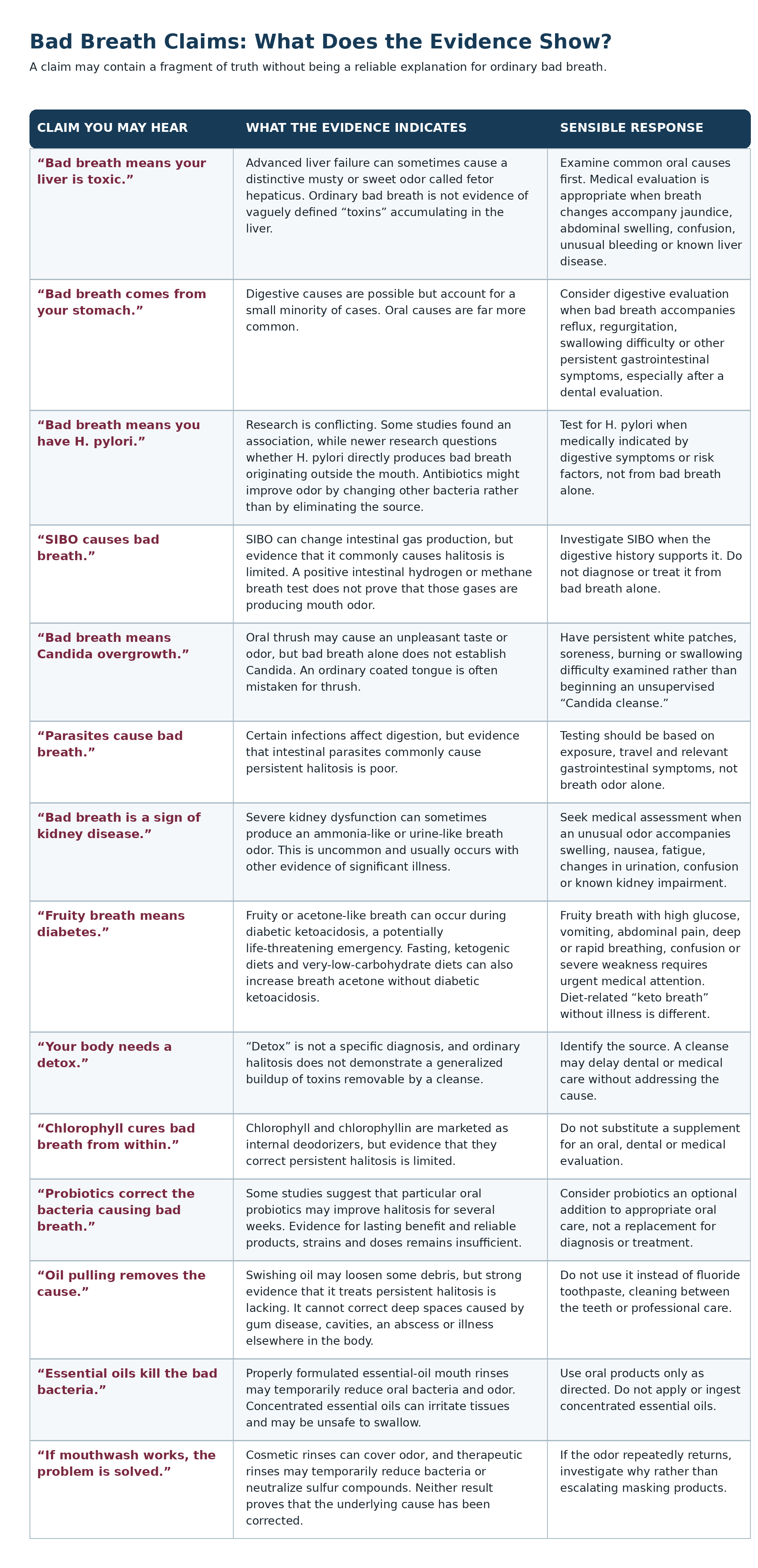
What People Say About Bad Breath and What the Evidence Shows
Online claims often begin with a fragment of truth and turn it into a universal explanation. The distinctions below matter
How to interpret health claims about breath
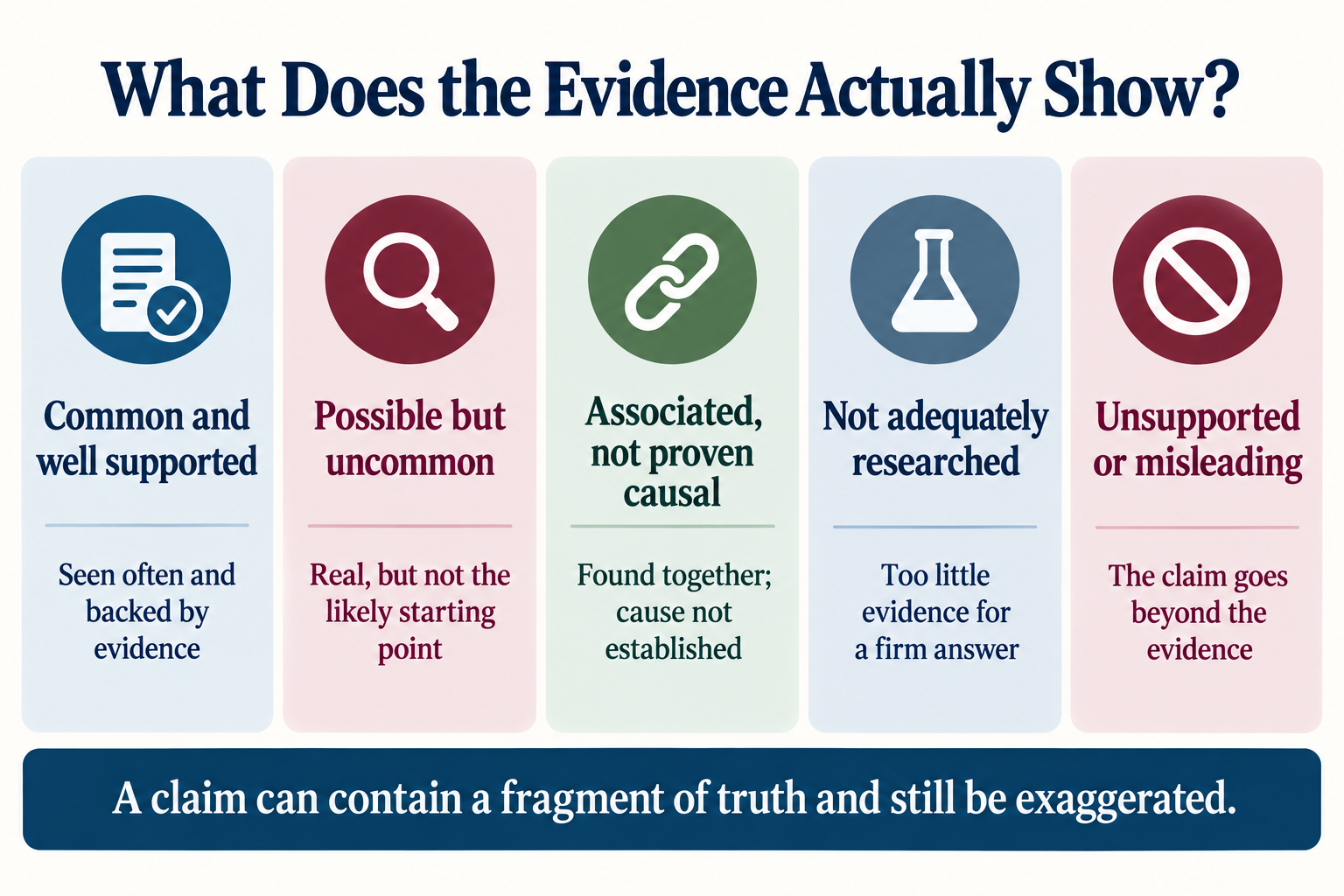
A real disease may sometimes affect breath odor without being a common explanation for bad breath. An association in a study does not establish that one condition caused the other. Research based on self-reported bad breath is also different from research using professional assessment.
The more dramatic the claim, the more important it is to ask:
- Was bad breath objectively confirmed?
- Were common oral causes ruled out?
- Was the suspected condition shown to cause the odor, or did the two merely occur together?
- Is the person making the claim selling the proposed solution?
Can You Reliably Test Your Own Breath?
People become accustomed to familiar odors, including their own. Breathing into cupped hands, licking a wrist or judging the taste in your mouth is not a dependable assessment.
You might ask a trusted person directly, but that can be uncomfortable for both people. A dentist can examine likely oral sources and may assess the odor. Specialized testing can measure certain odor-producing chemicals, although instruments do not detect every odor and do not always agree with assessment by a trained professional.
Professional evaluation matters because a person can have genuine halitosis without recognizing it—or can become convinced that an odor exists when others and clinicians cannot confirm it. Persistent fear of emitting an odor can create real distress and social withdrawal even when measurable halitosis is absent. That concern deserves compassion rather than ridicule.
What Helps, What Masks and What Requires Treatment?
Foundational oral care
Appropriate brushing with fluoride toothpaste, cleaning between the teeth and cleaning dental appliances reduce material that bacteria use. Gentle tongue cleaning may help remove tongue coating. It should not be so forceful that it causes pain, bleeding or tissue injury.
Mouthwash
Mouth rinses are not all alike:
- Cosmetic rinses primarily cover odor temporarily.
- Therapeutic rinses may reduce bacteria or neutralize odor-producing compounds.
- Products containing ingredients such as zinc, cetylpyridinium chloride or chlorhexidine have shown some benefit in studies, but the overall treatment evidence is limited and many trials are small or short.
Chlorhexidine can stain teeth, the tongue and restorations and can alter taste. It should not automatically become a permanent do-it-yourself treatment. Alcohol-containing rinses may also be uncomfortable for someone with dry mouth.
Hydration and saliva support
Water, management of mouth breathing and appropriate sugar-free gum or saliva substitutes may help when reduced saliva is involved. Repeatedly sucking sugar-containing mints can increase cavity risk even if they briefly improve the smell.
Professional treatment
Periodontal disease, cavities, abscesses, poorly fitting dental work and suspicious oral lesions require diagnosis and treatment. No breath product can repair them.
Probiotics and alternative approaches
Oral probiotics are promising but not yet established as a dependable long-term treatment. Evidence for chlorophyll, oil pulling, herbal remedies and many “internal deodorizing” products is limited. A temporary improvement should not be mistaken for proof that the underlying source has been removed.
A Practical Investigation Path
Step 1: Notice the pattern
Ask when the odor occurs, how long it lasts and whether it follows particular foods, alcohol, tobacco, fasting, sleep or medication changes. Note accompanying oral, nasal, respiratory or digestive symptoms.
Step 2: Look at ordinary oral-care factors
Review brushing, interdental cleaning, tongue coating and the cleaning of dentures or other appliances. Consider whether the mouth feels dry, particularly overnight.
Step 3: Arrange a dental examination if it persists
A dentist can look for gum disease, tooth decay, infection, dry mouth, defective restorations and abnormal tissue. Because most persistent halitosis originates in the mouth, this is normally the most productive professional starting point.
Step 4: Widen the investigation when appropriate
If an oral source is not found or treatment does not resolve the problem, accompanying symptoms can guide the next step. This might involve primary care, an ear, nose and throat specialist, a gastroenterologist or another clinician.
Step 5: Treat the cause rather than endlessly masking the odor
Mints, gum and rinses may be useful for temporary odor. Recurring bad breath requires attention to the environment that allows the odor to return.

When Not to Wait
Seek prompt medical or dental attention for bad breath accompanied by:
- Facial or neck swelling, fever, severe tooth pain or difficulty opening the mouth
- Difficulty breathing or swallowing
- A mouth sore, lump, thickened area, red or white patch, or unexplained bleeding that does not resolve
- Fruity breath with very high glucose, vomiting, abdominal pain, deep or rapid breathing, confusion or severe weakness
- Coughing blood, significant shortness of breath or severe respiratory symptoms
- Jaundice, marked abdominal swelling or confusion
- Substantial changes in urination, swelling, nausea or known serious kidney disease
- Unexplained weight loss or a persistent major change in health
These signs do not establish a diagnosis, but they make breath odor part of a larger clinical picture that should not be managed with mints or mouthwash.
If You Need to Tell Someone
People often cannot judge their own breath accurately. If you know the person well and believe they would want to know, tell them privately, directly and without humor.
You might say:
“I would want someone to tell me, so I hope it is all right that I mention this. I have noticed that your breath seems different lately. Sometimes that can happen from dry mouth, medication or a dental problem.”
Do not diagnose the cause, announce it in front of others or assume it reflects poor hygiene. The person may already be worried about it or may have a condition they are treating.
The Bottom Line
Persistent bad breath is common, and most cases originate in the mouth. The tongue, gums, teeth, dental appliances and saliva deserve attention before the stomach, liver or an exotic diagnosis is blamed.
That does not mean causes elsewhere should be dismissed. Reflux, nose and throat disorders, respiratory conditions, medications and rare illnesses affecting the body more broadly can sometimes affect breath. The presence of additional symptoms—and what remains after a proper oral examination—determines whether the investigation should widen.
The most useful response is neither embarrassment nor alarm. It is a sequence:
Confirm the problem. Start with the most likely causes. Follow the accompanying clues. Treat the source rather than repeatedly covering the odor.
Research Notes and Principal Sources
- Shang X, et al. Clinical Practice Guidelines on the Diagnosis and Treatment of Halitosis. International Dental Journal. 2026. PubMed: https://pubmed.ncbi.nlm.nih.gov/41678945/
- Memon MA, et al. Aetiology and associations of halitosis: A systematic review. Oral Diseases. 2023;29(4):1432–1438. https://pubmed.ncbi.nlm.nih.gov/35212093/
- Silva MF, et al. Estimated prevalence of halitosis: a systematic review and meta-regression analysis. Clinical Oral Investigations. 2018;22:47–55. https://pubmed.ncbi.nlm.nih.gov/28676903/
- Nagraj SK, et al. Interventions for managing halitosis. Cochrane Database of Systematic Reviews. 2019. https://pubmed.ncbi.nlm.nih.gov/31825092/
- Lee YH, et al. Oral microbiome as a co-mediator of halitosis and periodontitis: a narrative review. Frontiers in Oral Health. 2023. https://pmc.ncbi.nlm.nih.gov/articles/PMC10500072/
- Cassiano LS, et al. The association between halitosis and oral-health-related quality of life: A systematic review and meta-analysis. Journal of Clinical Periodontology. 2021. https://pubmed.ncbi.nlm.nih.gov/34409629/
- Huang N, et al. Efficacy of probiotics in the management of halitosis: a systematic review and meta-analysis. BMJ Open. 2022. https://pubmed.ncbi.nlm.nih.gov/36600415/
- Viana KSS, et al. Association Between Halitosis and Gastrointestinal Disorders: A Review. 2024. https://doi.org/10.1080/19424396.2024.2426249
- Chen Y, et al. Gastric Helicobacter pylori infection does not contribute to extraoral halitosis. Helicobacter. 2024. https://onlinelibrary.wiley.com/doi/10.1111/hel.13047
- Mortazavi H, et al. Drug-related Halitosis: A Systematic Review. Oral Diseases. 2020. https://pubmed.ncbi.nlm.nih.gov/32515409/
- National Institute of Dental and Craniofacial Research. Dry Mouth. https://www.nidcr.nih.gov/health-info/dry-mouth
- American Dental Association. Mouthrinse (Mouthwash). https://www.ada.org/resources/ada-library/oral-health-topics/mouthrinse-mouthwash