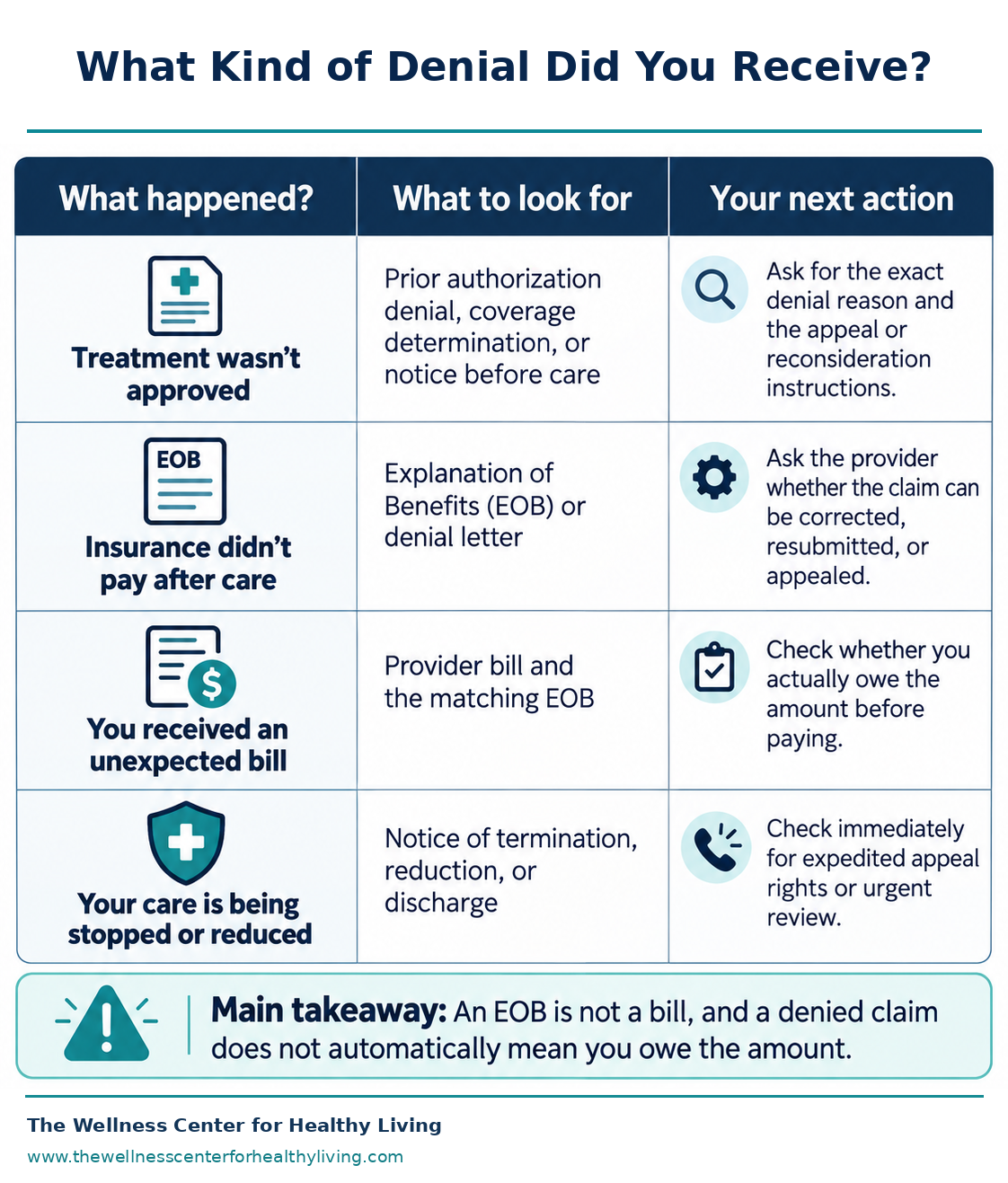
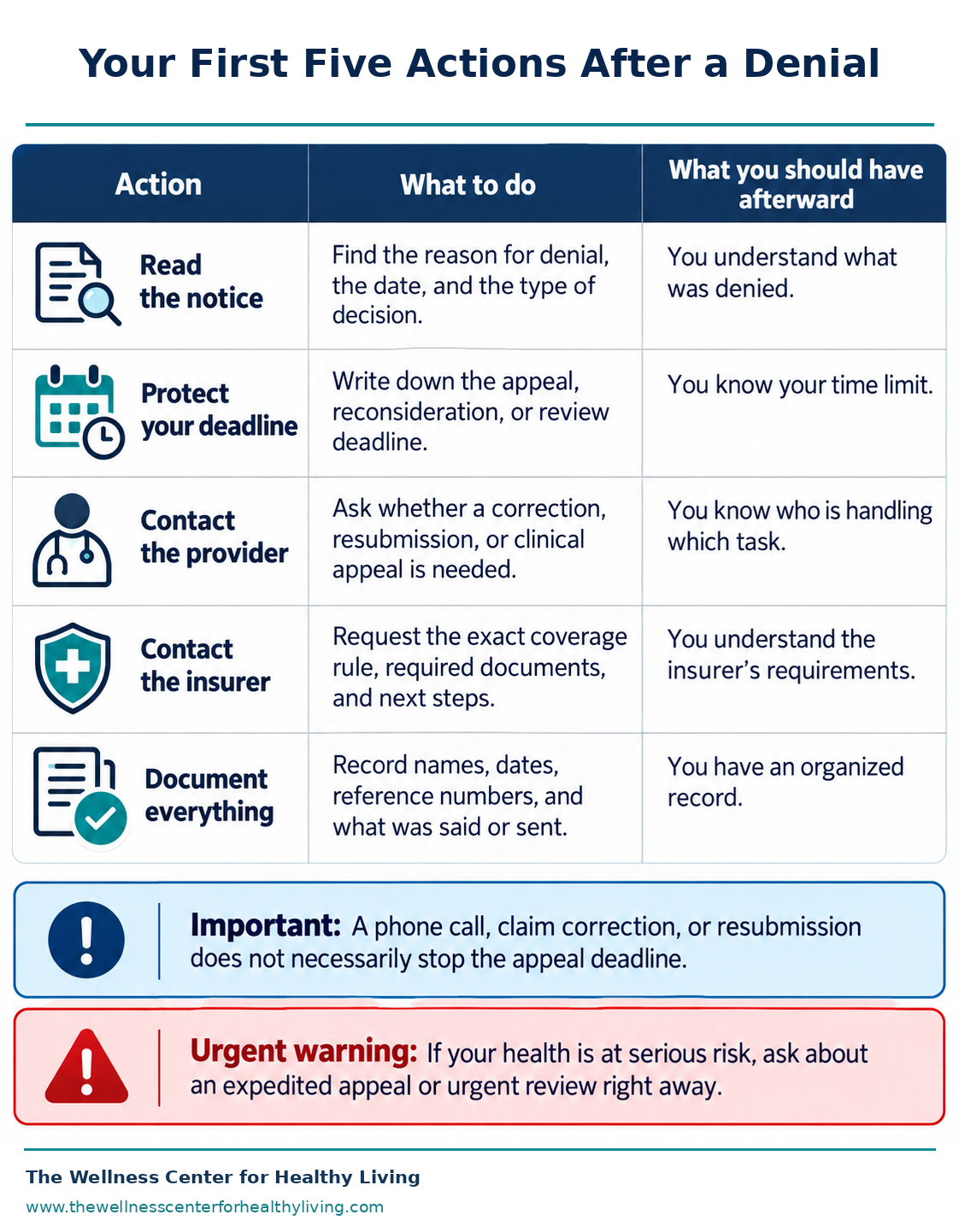
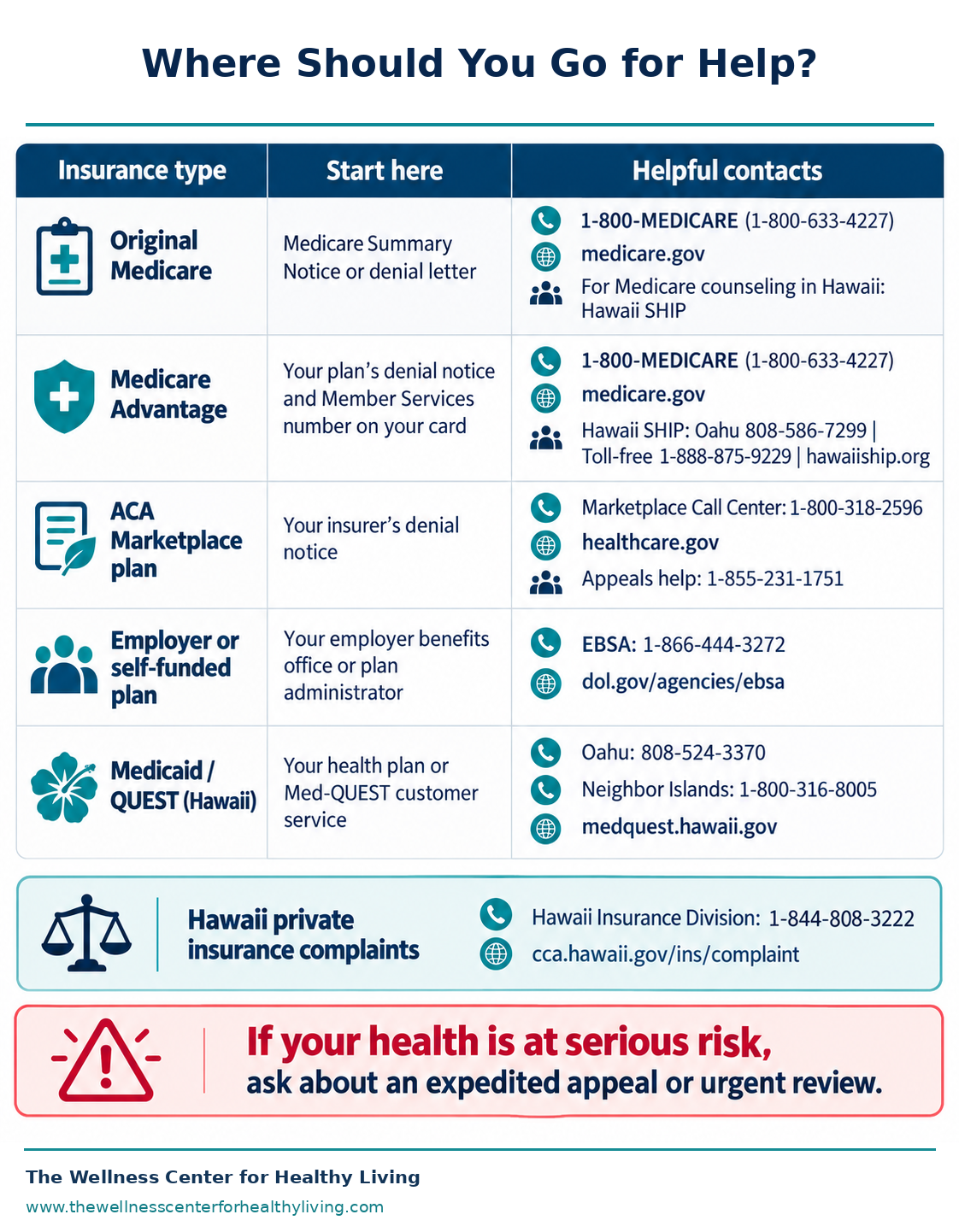
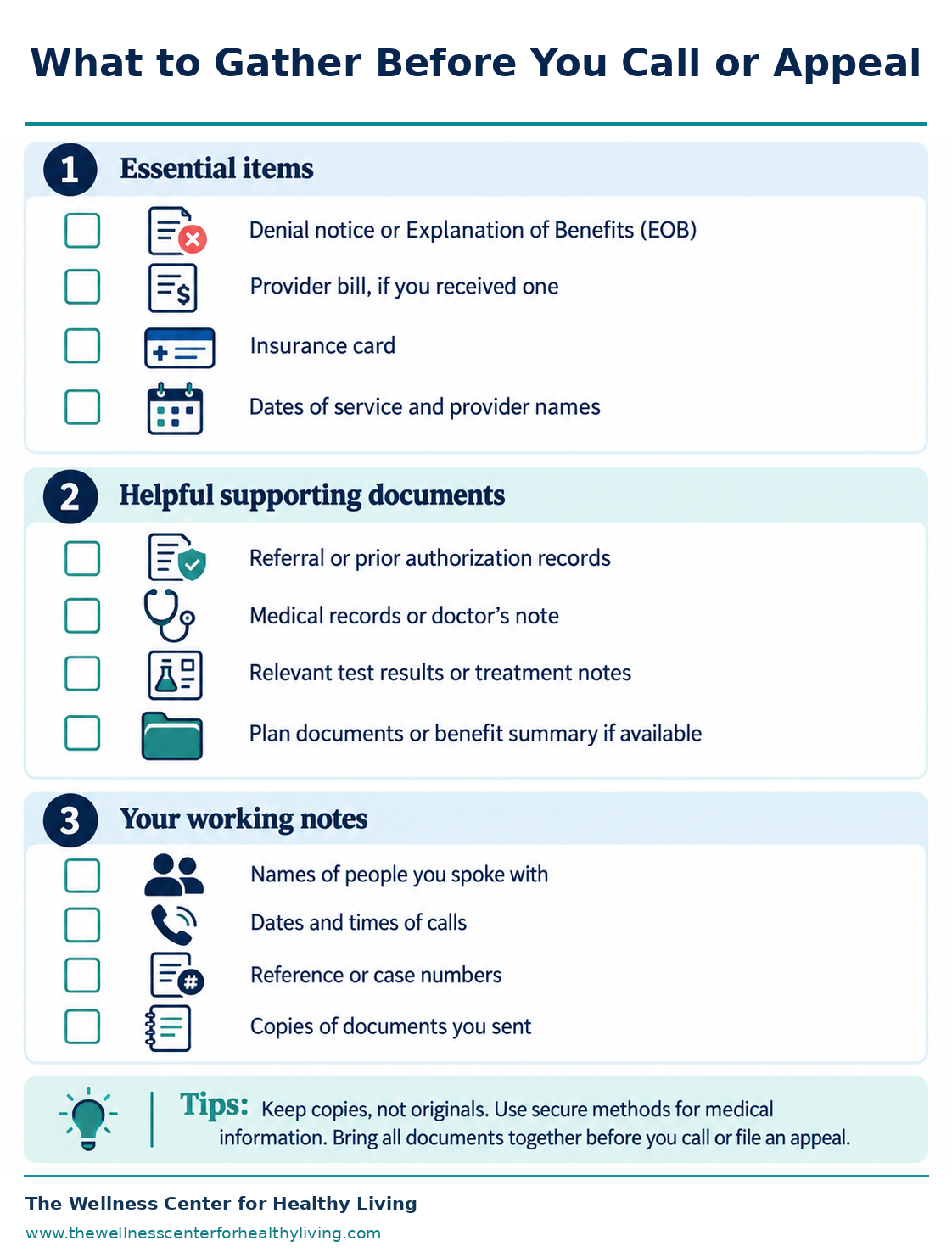
One additional precaution is worth emphasizing. Avoid sending original documents when copies are sufficient, and use secure methods for sharing medical information. Keep confirmation numbers, delivery receipts, or electronic submission acknowledgments whenever possible.
Step 5: Decide Whether You Need a Correction or a Formal Appeal
A formal appeal isn't necessarily the first or best response to every denial.
Suppose your provider submitted a claim using an incorrect code. The insurer might deny the claim because the information doesn't match its processing requirements. In that situation, the provider's billing office may be able to correct the claim and submit it again.
But suppose your insurer acknowledges that the information is accurate and still refuses to approve the treatment your physician recommends. That may require a formal appeal involving medical evidence and the plan's coverage criteria.
The distinction matters because the work involved is different. Correcting a claim is largely an administrative process. Challenging a medical-necessity determination requires explaining why the insurer's coverage decision should be reconsidered.
Don't let an informal correction process cause you to miss a formal appeal deadline. If you aren't sure whether the denial is being corrected or appealed, ask the insurer and provider to explain the status in writing.
Step 6: Know Your Appeal Deadline
There isn't one universal deadline for appealing a health insurance denial.
The following are common starting points, but the applicable notice and plan rules control your particular situation.
Medicare Advantage
For many Medicare Advantage appeals, the request for reconsideration must be filed within
65 days of the initial denial notice. Standard decisions generally have different processing timelines depending on whether care has already been received, and qualifying urgent cases can receive expedited review.
For example, many standard pre-service appeals have a 30-day decision period, while qualifying fast appeals generally require a decision within 72 hours. If a Medicare Advantage plan upholds certain denials at the first appeal level, the case proceeds automatically to an independent review entity.
Original Medicare
Original Medicare has a separate appeals system. Its initial appeal procedure generally involves requesting a redetermination after receiving a Medicare Summary Notice or other applicable decision notice. Some situations, such as termination of certain continuing services, involve special expedited procedures.
Follow the instructions and deadline on your notice rather than relying on Medicare Advantage rules.
Private and employer health plans
Many plans subject to federal health benefit appeal protections must give members at least
180 days to initiate an internal appeal. The insurer's decision period depends on whether the dispute concerns urgent care, care not yet received, or a service already provided.
For certain decisions, an independent external review may also be available, usually after completing the internal appeals process. Under the federal external review framework, the ordinary filing deadline is generally four months after the applicable final denial notice.
Medicaid
Medicaid and managed-care plans have their own rules, including procedures for appealing benefit denials, reductions, or termination of services. Follow the notice and the rules of the relevant state Medicaid program or managed-care plan.
An especially important exception applies to services being stopped or reduced. Some programs have short deadlines for requesting continuation of benefits while an appeal is pending. Don't assume you have the same amount of time as someone appealing payment for an already completed service.
Because appeal rules change and depend on coverage, always confirm the applicable deadline directly with your plan or responsible agency.
Step 7: What If Your Doctor's Office Can't Keep Fighting?
This is one of the most difficult practical problems.
Your physician may strongly support a treatment, but the practice also has patients to see, medical records to maintain, employees to pay, and many other administrative obligations. Insurance disputes can consume substantial time, and providers aren't necessarily paid separately for all the work involved.
If your doctor's office tells you it cannot do more, try to identify exactly what assistance is still possible.
For example, the office may not have the resources to manage repeated appeals, but your physician might be willing to provide a medical-necessity letter, identify the relevant clinical records, or explain the consequences of delaying treatment.
You can also ask whether the office has a patient advocate, care coordinator, or referral to a hospital or health-system patient assistance service.
If the dispute concerns a Medicare plan, a SHIP counselor may help you understand the process. For qualifying private insurance disputes, a consumer assistance program, insurance regulator, or federal benefits advisor may help clarify your rights.
More complicated cases may justify contacting a legal aid organization or attorney familiar with health insurance disputes, particularly when substantial medical expenses, loss of benefits, or continuing-care decisions are involved.
The important point is that
you don't have to rely exclusively on your doctor's office, even though your physician's medical evidence may remain essential to the appeal.
Step 8: What If the Appeal Is Denied Again?
An unsuccessful internal appeal doesn't always end the process.
Depending on your insurance arrangement and the kind of dispute, an independent reviewer may examine the insurer's decision. This may be called external review, independent review, or another level of appeal.
For many eligible private health-plan disputes, external review provides an assessment by someone outside the insurance company. Medicare has its own multi-level appeals structure, including independent review at a subsequent stage.
Read the appeal decision carefully. It should explain why the insurer maintained the denial and identify any further review rights that apply.
At this stage, ask what additional information or evidence could address the decision. If the dispute turns on medical necessity, your physician may be able to explain why the insurer's criteria don't adequately reflect your circumstances. If the dispute concerns coverage language, you may need help interpreting the plan document.
If the available appeals have been exhausted, additional legal or regulatory options may exist, depending on the plan and circumstances.
Don't Overlook Unexpected Medical Bills
Not every unexpected bill results from a legitimate patient obligation.
Sometimes an insurer denies a provider's claim because it was submitted incorrectly. In other situations, the amount charged may be subject to contractual restrictions or federal and state protections against certain surprise medical bills.
For example, the federal No Surprises Act protects many patients from certain out-of-network bills for emergency services and specified services furnished at in-network facilities.
Before paying a large unexpected bill, compare the provider's statement with the insurer's EOB and ask both parties to explain the amount.
If you suspect a violation of federal surprise-billing protections, the No Surprises Help Desk can provide information at
1-800-985-3059.
The key lesson is simple: A denied claim and a bill from a provider don't automatically establish that every dollar billed is your responsibility.
Keep a Record Until the Matter Is Resolved
Insurance disputes can involve several telephone calls, multiple documents, and different representatives. Without a written record, it becomes difficult to determine what has already been promised, submitted, or reviewed.
A simple notebook or digital folder can make a difference. Record the date of every conversation, the name or identification number of the person you spoke with, the instructions given, and any deadline or expected response date.
If you send an appeal, save a copy and proof of submission. If someone tells you a claim will be corrected or a decision reconsidered, request a confirmation or reference number.
Once the issue is resolved, verify that the insurer's updated decision is reflected in the claim or authorization record and that the provider's billing information has been adjusted where appropriate.
An approval letter is important, but the process isn't necessarily complete until the promised coverage or payment has actually been implemented.
Taking Control When Insurance Says No
Receiving a denial can be intimidating, especially if you're already dealing with a medical problem. But a denial notice is information about a decision, not necessarily the final word on whether you can receive care or whether you owe a medical bill.
Your first responsibility isn't to become an expert in healthcare law. It's to identify the decision, preserve your deadlines, determine who can help, and gather the information needed to address the actual issue.
Sometimes a corrected claim will resolve the problem. Sometimes a formal appeal is necessary. And sometimes independent assistance becomes the most important next step.
The more clearly you understand what was denied, why it was denied, and who has authority to review the decision, the better equipped you'll be to protect your interests.
Sources and Further Reading
Medicare: Appeals in Medicare Health Plans
https://www.medicare.gov/providers-services/claims-appeals-complaints/appeals/medicare-health-plans
Medicare: Appeals in Original Medicare
https://www.medicare.gov/providers-services/claims-appeals-complaints/appeals/original-medicare
HealthCare.gov: Internal Appeals
https://www.healthcare.gov/appeal-insurance-company-decision/internal-appeals/
HealthCare.gov: External Review
https://www.healthcare.gov/appeal-insurance-company-decision/external-review/
U.S. Department of Labor: Filing a Claim for Your Health Benefits
https://www.dol.gov/agencies/ebsa/about-ebsa/our-activities/resource-center/publications/filing-a-claim-for-your-health-benefits
Hawaii SHIP
https://www.hawaiiship.org/contact/
Hawaii Insurance Division: Filing a Complaint
https://www.cca.hawaii.gov/ins/complaint/
Hawaii Med-QUEST: Grievances and Appeals
https://medquest.hawaii.gov/en/members-applicants/rights-and-responsibilities/grievance-appeals.html