

Guides
Immune System Guide
A Practical Guide to Supporting It, Protecting It, and Knowing When to Ask Why
Most discussions about immunity begin with the question:
How can I boost my immune system?
That may not be the best question.
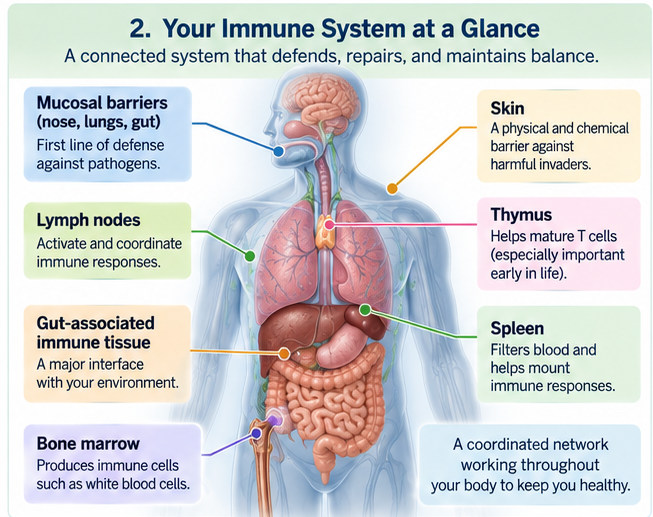
Your immune system is not a single defense mechanism that becomes healthier simply by becoming stronger. It is an enormous network of cells, tissues, organs, barriers, chemical signals and microorganisms that must recognize threats, respond appropriately, remember some previous threats, tolerate things that are harmless and eventually know when to stop responding.
Sometimes you need a vigorous immune response.
Sometimes you need restraint.
The goal is not maximum immune activity. The goal is an immune system that responds appropriately.
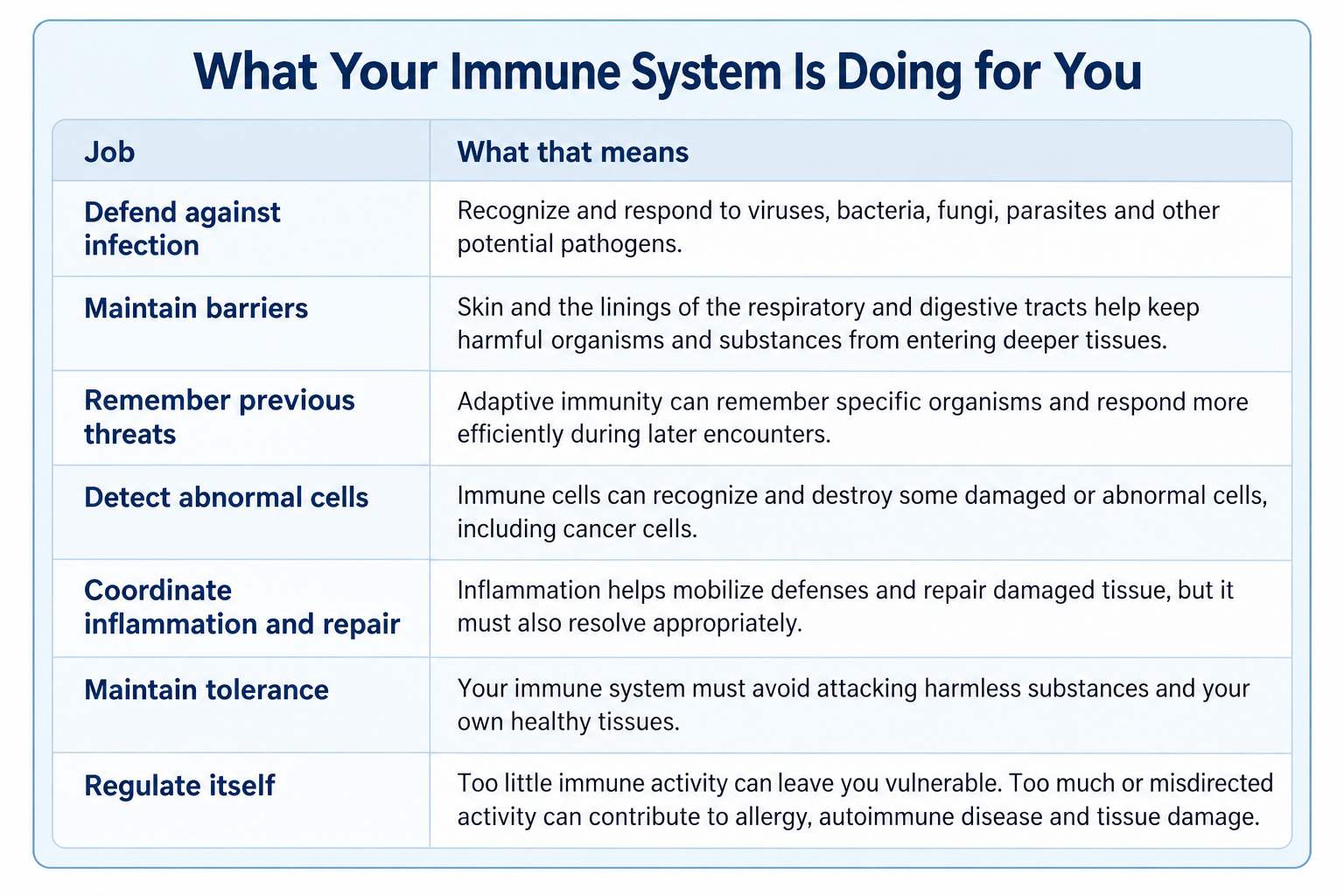
The National Cancer Institute notes that the immune system normally detects and destroys abnormal cells and probably prevents or limits the growth of many cancers. Cancer can nevertheless develop because abnormal cells can become less visible to the immune system, suppress immune cells or exploit normal mechanisms that prevent immune responses from becoming excessive.
What This Guide Will - and Will Not - Try to Do
This is a practical health Guide, not a textbook on immunology.
We will not attempt to teach the cellular and molecular details of B cells, T cells, antibodies, complement proteins, cytokines, bone marrow, thymus function, autoimmune diseases, allergies, immunodeficiency disorders or cancer immunotherapy.
Those subjects matter.
But our focus here is different:
What influences the environment in which your immune system operates?
What can you reasonably do for yourself?
What changes should make you ask why?
When should you stop trying to manage something yourself and seek professional help?
1. Protect Your Sleep Before Reaching for an Immune Supplement
Eye-Opener
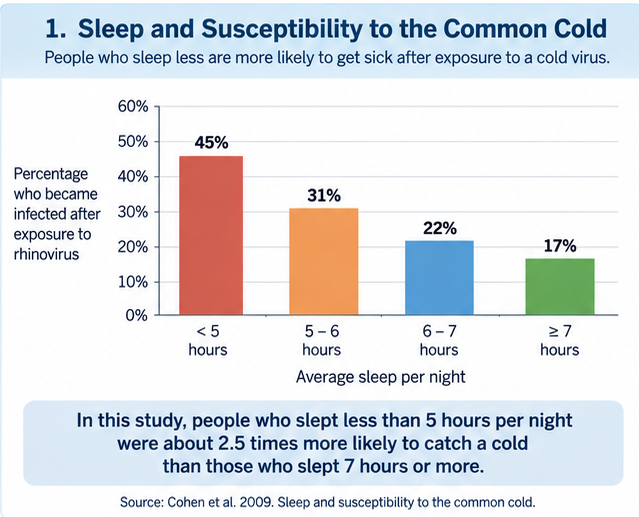
In one controlled study, people sleeping fewer than five hours per night had about 4 1/2 times the odds of developing a clinical cold after deliberate rhinovirus exposure compared with people sleeping more than seven hours.
Researchers were not simply asking whether participants felt sick. They exposed 164 healthy adults to rhinovirus and monitored them for infection plus objective signs of illness.
Research
For seven days before virus exposure, researchers measured sleep with wrist monitors. Participants were then quarantined, given nasal drops containing rhinovirus and followed for development of a clinical cold.
Those sleeping fewer than five hours had an odds ratio of 4.50 compared with people sleeping more than seven hours. Those sleeping five to six hours had similarly elevated odds.
The study does not prove that getting eight hours of sleep will prevent infection. It does provide unusually direct evidence that sleep before an exposure can influence what happens afterward.
Actionable Tips
- Give yourself enough time in bed to obtain adequate sleep.
- Look at your usual pattern rather than relying on occasional catch-up sleep.
- Pay attention to persistent insomnia, frequent waking or unusually short sleep.
- Investigate persistent snoring, daytime sleepiness or possible sleep apnea.
- Protect sleep during periods of stress rather than allowing it to become the first thing sacrificed.
- Review alcohol, medications, pain, caffeine and other factors that may be interfering with sleep.
- Do not expect an immune supplement to compensate for chronically inadequate sleep.
2. Stress Can Affect What Happens After an Exposure
Eye-Opener
Stress did not merely make people report feeling sick. In a controlled study, people with greater psychological stress were more likely to develop documented infection and clinical colds after researchers deliberately exposed them to respiratory viruses.
Research
Nearly 400 healthy adults were evaluated for psychological stress before being exposed to respiratory viruses. As psychological stress increased, so did documented infection and clinical illness.
Researchers considered factors including age, sex, season, smoking, alcohol use, allergies and preexisting antibodies. That does not mean stress alone causes infection, nor does it mean positive thinking prevents illness. Stress is one part of the biological and behavioral environment in which illness develops.
Actionable Tips
- Pay particular attention to stress that has become persistent rather than one difficult day.
- Protect sleep, meals, medications, movement and recovery during stressful periods.
- Identify one recurring burden that could be reduced, delegated, delayed or discussed.
- Notice whether stress is changing how much you drink, eat, sleep or move.
- Build periods of recovery into prolonged stressful situations when the stressor itself cannot be eliminated.
- Treat persistent anxiety, depression, trauma symptoms or loss of normal function as health concerns worthy of attention.
3. Regular Movement Matters More Than an Occasional Heroic Workout
Eye-Opener
A large systematic review found that people engaging in regular moderate-to-vigorous physical activity had a lower risk of community-acquired infectious disease. The important word is regular.
Research
A 2021 systematic review and meta-analysis examined research involving hundreds of thousands of participants. Habitual physical activity was associated with lower risk of community-acquired infection and infection-related mortality. Exercise interventions also produced changes in several measures of immune function.
Much of the infection evidence was observational, so it cannot prove that exercise alone caused the difference. But the overall pattern supports regular activity far more than occasionally exhausting yourself in the name of fitness.
Actionable Tips
- Accumulate movement across the week.
- Include aerobic activity appropriate to your ability.
- Include strength work.
- Include balance and stability work when appropriate.
- Increase activity gradually if you have been inactive.
- After illness, rebuild activity rather than assuming you should immediately return to your previous level.
- Do not use exhaustion as proof that a workout was effective.
- Reduce exertion and reassess when you have fever, marked fatigue, chest symptoms or significant breathing difficulty.
- Pay attention when your usual walking tolerance, stamina or physical capacity noticeably changes.
4. Manage the Health Conditions That Change Your Risk
Eye-Opener
For someone with diabetes, improving management of the disease may be more consequential than buying another product labeled immune support.
Research
A large nine-year South Korean cohort study compared more than 66,000 people with diabetes with more than 132,000 matched people without diabetes. The group with diabetes had substantially higher rates of infection-related hospitalization.
Diabetes is only one example. Kidney disease, lung disease, vascular disease, malnutrition, obesity, some cancers, immune disorders and certain medications can also alter susceptibility, healing, recovery or immune response.
This does not mean everyone with diabetes will heal slowly or experience repeated infections. Risk changes probability. It does not determine what will happen to every individual.
Actionable Tips
- Know which of your existing conditions may affect infection risk, recovery or healing.
- Manage blood glucose according to an individualized plan.
- Pay attention to persistent highs, frequent lows and large glucose fluctuations if you monitor them.
- Keep blood pressure and other important chronic conditions under appropriate management.
- Know whether kidney, liver, lung or vascular disease changes decisions you make during illness.
- Keep an accurate medication list.
- Ask whether any medication or treatment suppresses or modifies immune function.
- Pay attention when your normal pattern changes rather than assuming the change is inevitable because of a diagnosis.
5. Essential Does Not Mean More Is Better
Eye-Opener
A nutrient can be absolutely necessary for normal immune function without providing additional benefit when you already have enough. Those are two different claims.
Research
The immune system depends on adequate amounts of many nutrients, including vitamins A, B6, B12, C, D and E, folate, iron, copper, magnesium, selenium and zinc. Deficiencies can impair normal immune function. Correcting a deficiency can therefore matter.
But NIH notes that, in most cases, taking more vitamins or minerals when you are not deficient does not prevent infections or make you recover faster. Excessive doses can also cause harm. For example, prolonged high zinc intake can interfere with copper status.
Actionable Tips
- Know everything you take, including dose.
- Look for duplicate nutrients across multivitamins and combination products.
- Ask why you are taking each supplement.
- Ask whether the reason still exists.
- Correct documented deficiencies when appropriate.
- Review prolonged high-dose supplementation with a physician or pharmacist.
- Consider medication-supplement interactions.
- Do not assume that natural means harmless.
- Do not assume that an ingredient being essential means that taking more produces more benefit.
6. Hydration Supports the Systems Your Immunity Depends On
Eye-Opener
Water is not an immune booster. But virtually every system supporting immune function operates in a water-dependent body. Adequate hydration supports circulation, temperature regulation, digestion, kidney function and normal moisture of tissues and mucosal surfaces.
Research
The body continuously loses water through urine, stool, breathing and perspiration. Fluid requirements differ according to body size, diet, activity, climate, illness, medications and medical conditions.
Drinking beyond your needs does not continually strengthen immunity. The practical goal is adequacy, not maximum intake. People with kidney disease, heart failure or prescribed fluid restrictions may need individualized advice.
Actionable Tips
- Drink regularly enough to avoid habitual dehydration.
- Increase attention to fluids during heat, heavy activity, fever, vomiting or diarrhea.
- Consider how much caffeine and alcohol contribute to your total fluid pattern.
- Pair increased dietary fiber with adequate fluid.
- Pay attention to unusual thirst, very dark urine, markedly reduced urination, dizziness or dry mouth.
- Do not follow blanket fluid formulas if you have been given a medical fluid restriction.
- Think of hydration as maintaining normal operating conditions rather than boosting anything.
7. Your Gut Is One of the Immune System's Busiest Interfaces
Eye-Opener
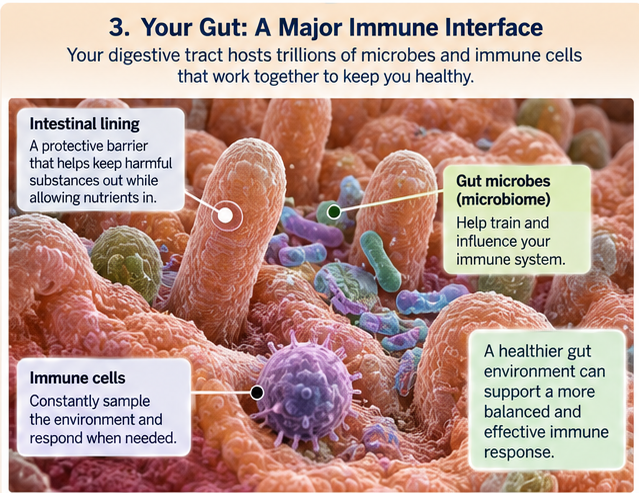
Your digestive tract is not simply a tube that processes food. It is one of the largest places where your body must constantly decide what to tolerate and what to defend against.
Research
The intestinal lining creates a physical barrier between the contents of the digestive tract and the tissues underneath it. Gut-associated immune tissue, intestinal cells, mucus and trillions of microorganisms interact continuously.
The microbiome participates in digestion and produces compounds that can influence intestinal and immune signaling. But gut health is not synonymous with taking probiotics, and there is no single ideal microbiome that everyone should attempt to manufacture.
Actionable Tips
- Eat a variety of fiber-containing foods that you tolerate.
- Increase fiber gradually rather than dramatically changing intake overnight.
- Drink enough fluid for the amount of fiber you consume.
- Pay attention to bowel regularity.
- Do not repeatedly ignore the urge to have a bowel movement.
- Keep physically active; movement can also support bowel function.
- Notice which foods consistently cause significant bloating, pain, diarrhea or other symptoms.
- Do not assume that every digestive symptom means you need probiotics.
- Use antibiotics when they are needed, but not casually.
- Investigate persistent constipation, diarrhea, abdominal pain, blood in the stool, unexplained weight loss or major changes in bowel habits.
- When a digestive problem keeps returning, ask why rather than endlessly changing supplements.
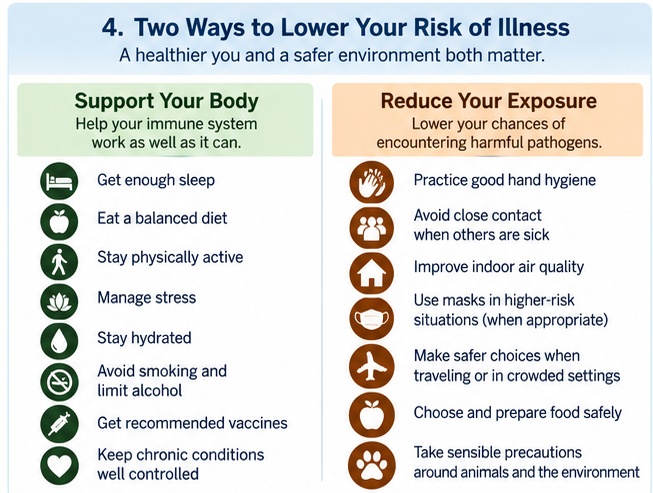
8. Healthy Habits Cannot Cancel a Large Exposure
Eye-Opener
You can sleep well, exercise, eat carefully and still become ill after a significant exposure. Likewise, someone whose health is imperfect can still reduce how much exposure reaches them. These are different parts of prevention.
Research
Respiratory pathogens can become concentrated near an infected person and can accumulate in poorly ventilated indoor spaces. Ventilation, filtration, distance in selected situations and masks when appropriate act primarily on exposure.
Sleep, nutrition, physical activity and chronic-disease management act primarily on the person receiving the exposure. Healthy habits also do not teach the immune system to recognize specific diseases. Vaccines can create disease-specific immune recognition. These approaches perform different jobs.
Actionable Tips
- Improve indoor air where you spend substantial time.
- Bring in outdoor air when outdoor conditions are suitable.
- Use HVAC filtration appropriate for your system.
- Consider a properly sized portable air cleaner when useful.
- Stay away from others when acutely ill when practical.
- Avoid close contact with someone who is acutely ill when practical.
- Practice good hand hygiene when the exposure makes it relevant.
- Consider additional precautions in crowded or higher-risk settings.
- Make vaccination decisions based on the specific disease, your age, health, previous vaccination, benefits, limitations and personal circumstances.
9. Aging Does Not Simply Turn Immunity Down
Eye-Opener
An aging immune system can become less effective in some ways and more inflammatory in others at the same time. Weaker immunity is too simple.
Research
Researchers use the term immunosenescence to describe many age-related immune changes. Another term, inflammaging, describes the persistent low-grade inflammatory activity commonly observed with aging.
Older immune systems may respond less effectively to some unfamiliar pathogens or vaccines while also showing more ongoing inflammatory signaling. Chronological age does not determine one individual's immune function. Two people of the same age can differ substantially because of chronic disease, medications, frailty, sleep, nutrition, smoking, alcohol use, physical activity, prior infections and many other factors.
Actionable Tips
- Do not assume age alone tells you how well your immune system works.
- Protect muscle and physical capacity as you age.
- Maintain adequate nutrition.
- Protect sleep.
- Manage chronic conditions.
- Review medications that alter immune function.
- Avoid smoking and excessive alcohol.
- Keep physically active at a level appropriate to your ability.
- Pay attention to changes in recovery time or function.
- Seek advice earlier when illness is progressing rapidly or your underlying risk is high.
10. Smoking and Heavy Alcohol Use Affect Today's Defenses Too
Eye-Opener
Smoking and heavy alcohol use do not matter only because of diseases that may develop years from now. They can interfere with defenses your body is using today.
Research
Smoking can damage respiratory tissues and interfere with the mucus-and-cilia system that helps remove inhaled particles and microorganisms.
Heavy and binge drinking can affect multiple parts of innate and adaptive immune function and can interfere with sleep, nutrition, tissue repair and recovery. That does not mean one drink turns off the immune system. Dose and pattern matter.
Actionable Tips
- If you smoke, view reduction or cessation as an immune-health action as well as a cancer and cardiovascular action.
- Reduce secondhand-smoke exposure.
- Avoid binge drinking.
- Reduce heavy alcohol intake.
- Do not begin drinking because of presumed health benefits.
- Pay attention when alcohol is interfering with sleep, food intake or medication use.
- If stopping alcohol suddenly could produce withdrawal, seek medical guidance rather than attempting abrupt cessation alone.
11. Social Connection Matters - but More Socializing Is Not Always Better
Eye-Opener
Healthy social connection is not measured by how many people you see. It is closer to having the amount, quality and type of connection that meets your needs.
Research
Social connection has repeatedly been associated with physical as well as emotional health. Supportive relationships can buffer stress and contribute to healthier behavior and longer-term health.
But this does not mean every person should become highly social. Someone energized by frequent interaction and someone who prefers a small number of close relationships may both be socially well-supported.
Actionable Tips
- Ask whether you have enough meaningful connection for you.
- Distinguish solitude you enjoy from loneliness you do not want.
- Notice whether social interaction usually restores you or consistently depletes you.
- Protect relationships in which you feel supported, respected and able to be yourself.
- Reduce chronic relationship stress where possible.
- Use phone, video, groups, hobbies, volunteering or in-person contact according to what actually works for you.
- Do not use someone else's social life as your standard.
12. Sunlight, Vitamin D and Immunity: Important, but Not as Simple as It Sounds
Eye-Opener
Vitamin D matters to immune function. That does not mean that more sunlight or more vitamin D automatically means more immunity.
Research
Vitamin D participates in immune regulation as well as bone and mineral health. Low vitamin D status is common in some populations and may require attention.
But supplementation studies have not shown uniform protection against respiratory infections in people who are already sufficient. Sunlight can enable the skin to produce vitamin D, but production varies enormously with skin pigmentation, age, season, latitude, clothing, time outdoors and other factors. Ultraviolet radiation also contributes to skin and eye damage.
Actionable Tips
- Know whether vitamin D adequacy is a reasonable concern for you.
- Consider diet, lifestyle, health conditions and laboratory results rather than relying on assumptions.
- Use daylight and outdoor time in ways that make sense for your circumstances.
- Do not treat deliberate excessive UV exposure as an immune intervention.
- Balance vitamin D considerations with appropriate skin and eye protection.
- If supplementation is appropriate, use a dose suited to the need rather than assuming more is better.
- Periodically reassess supplements that were started because of a previous deficiency.
13. When Your Body Is Telling You to Ask Why
Eye-Opener
One unusual symptom rarely proves that you have a weak immune system. A better question is often: Why is this happening?
Research
Slow wound healing, repeated infections, persistent mouth problems, unusual skin infections and unusually prolonged recovery can have many causes.
Possible explanations include infection, diabetes, poor circulation, nutritional problems, medication effects, smoking, structural problems, chronic disease or immune dysfunction.
Persistent bad breath deserves a why, but most persistent halitosis begins with oral, dental, dry-mouth, sinus or other local causes rather than proving poor immunity. Gas and bloating can also deserve investigation, but they are not reliable markers of weak immunity.
The clue is often not the symptom by itself. It is the pattern.
Actionable Tips
- Is this different from what is normal for me?
- Is a wound steadily improving or has healing stalled?
- Are infections becoming more frequent?
- Are they becoming more severe?
- Are they taking longer to clear?
- Does the same infection keep returning?
- Am I developing infections in several different places?
- Am I requiring antibiotics repeatedly?
- Has my recovery time changed?
- Has something changed in my medications, blood sugar, nutrition, dental health, sleep, breathing or living environment?
14. The Direction of an Illness May Matter as Much as Its Name
Eye-Opener
A cold that is rapidly getting worse may deserve more attention than a diagnosed infection that is steadily improving. The label matters. But the direction matters too.
Research
Many infections can be managed at home. Concern rises when symptoms become severe, return after improvement, interfere with hydration or alertness, or produce a meaningful decline in breathing or normal function.
Older adults, pregnant people, immunocompromised people and those with significant chronic disease may need advice sooner.
Actionable Tips
- Monitor symptoms that linger without improvement, repeated infections, unusually slow recovery, a meaningful decline from normal function, a wound that is not progressing toward healing, or a new pattern that keeps returning.
- Contact a healthcare professional promptly when symptoms are clearly worsening, fever or cough improves and then returns significantly worse, breathing becomes more difficult, you cannot keep fluids down, urination falls substantially, weakness or unsteadiness becomes significant, or someone at higher medical risk becomes ill.
- Seek urgent or emergency care for severe trouble breathing, significant chest pressure or pain, blue or gray lips, new confusion, fainting, inability to wake normally, signs of stroke, or other sudden severe changes.
Your Immune System Is Part of a Larger System
One of the easiest mistakes to make is treating immunity as though it were an isolated body system.
It is not.
Sleep affects metabolism, cognition and immune function. Exercise affects circulation, muscle, glucose regulation and inflammatory signaling. The gut influences nutrition and interacts extensively with immune tissue. Diabetes can affect infection susceptibility, circulation and healing. Smoking affects lungs, blood vessels, cancer risk and respiratory defenses. Relationships affect stress, behavior and health. Immune cells participate in surveillance against abnormal cells.
That is why there is no single supplement, food or behavior that can substitute for the larger pattern.
You Do Not Need to Do Everything at Once
Reading a long list of useful actions can create its own problem.
It can leave you thinking:
Now I have 40 more things I am supposed to do.
That is not the purpose of this Guide.
The goal is to understand your options and begin building a plan that works for you.
You may already be doing many of these things. Others may not apply to you. Some may require medical guidance.
And some may be worth adding gradually.
A Better Question Than "How Do I Boost My Immunity?"
Perhaps the useful question is:
What conditions am I creating for my immune system to do its job?
Sometimes the answer is more sleep.
Sometimes it is better management of blood glucose.
Sometimes it is enough food and nutrients.
Sometimes it is adequate hydration.
Sometimes it is addressing a digestive problem.
Sometimes it is cleaner air.
Sometimes it is reducing smoking or heavy drinking.
Sometimes it is enough human connection.
Sometimes it is correcting a deficiency.
Sometimes it is recognizing that something in your body has changed.
And sometimes it is knowing that a problem has moved beyond self-care.
The goal is not to make your immune system endlessly stronger.
The goal is to support appropriate function, reduce avoidable risks, recognize meaningful changes and take action when something deserves attention.
Take Control of Your Health!
The Wellness Center for Healthy Living
References and Further Reading
- Centers for Disease Control and Prevention. Support Your Immune Health.
- Centers for Disease Control and Prevention. Healthy Habits: Enhancing Immunity.
- Prather AR, Janicki-Deverts D, Hall MH, Cohen S. Behaviorally Assessed Sleep and Susceptibility to the Common Cold. Sleep. 2015.
- Cohen S, Tyrrell DAJ, Smith AP. Psychological Stress and Susceptibility to the Common Cold. New England Journal of Medicine. 1991.
- Chastin SFM, et al. Effects of Regular Physical Activity on the Immune System, Vaccination and Risk of Community-Acquired Infectious Disease. Sports Medicine. 2021.
- Kim EJ, et al. Large cohort research examining diabetes and infection risk. Diabetes & Metabolism Journal.
- National Institutes of Health, Office of Dietary Supplements. Dietary Supplements for Immune Function and Infectious Diseases.
- National Cancer Institute. Immunotherapy to Treat Cancer.
- National Cancer Institute. The Immune System and Microbiome.
- National Institute of Diabetes and Digestive and Kidney Diseases. Eating, Diet & Nutrition for Constipation and Treatment for Constipation.
- Centers for Disease Control and Prevention. Social Connection.
- Merck Manual Professional Edition. Approach to the Patient With Suspected Immunodeficiency.
- National Institute on Alcohol Abuse and Alcoholism. Information on alcohol's effects on the body and immune system.
- Centers for Disease Control and Prevention. Respiratory illness prevention and warning-sign guidance.
This Guide is educational and is not intended to diagnose disease or replace individualized medical care.
A Note from Marsha
I did not want this Guide to leave you with a long list of things you “should” do and no practical way to use them.
That is why I created My Immune Support Action Plan. It lets you see what you already do, choose what you want to add, and come back later to decide what is actually working for you.
I especially wanted the review step included. We often start something with good intentions and never stop to ask whether it helped, whether it fits our life, or whether something else now makes more sense.
You do not have to change everything at once.
Start with what makes sense for you, then build from there.

Where You Might Want To Go Next
My Immune Support Action Plan
This 5-page downloadable worksheet takes the practical actions from this Guide and puts them in one place, so you can see what you already do, choose what you want to add, set a start date and come back later to review what is working.
7 Daily Habits
Article
This article looks at the everyday behaviors that quietly shape health over time. It is a useful next step if you want to move beyond immune health and look at the broader habits that support how your body functions day to day.
Hawai‘i Safe Food Guide
This Guide focuses on another part of prevention: reducing avoidable risk from foodborne illness. It includes practical food-safety guidance designed for everyday use, with particular attention to conditions and concerns that matter in Hawai‘i.