

Marsha Sakamaki • December 16, 2024
Short notes on health, aging, and prevention.
No noise. No selling. Ever.
Share this Resource:
11 Scientifically-Proven Ways to Lower Cortisol and Manage Stress for Better Health
Cortisol is often called the “stress hormone,” which can make it sound like something we should always try to lower. But cortisol is essential. It helps regulate blood sugar, blood pressure, inflammation, energy, alertness and the body’s response to challenge.
The real issue is not whether cortisol rises. It is supposed to rise. The question is whether your body can return toward balance when the demand has passed.

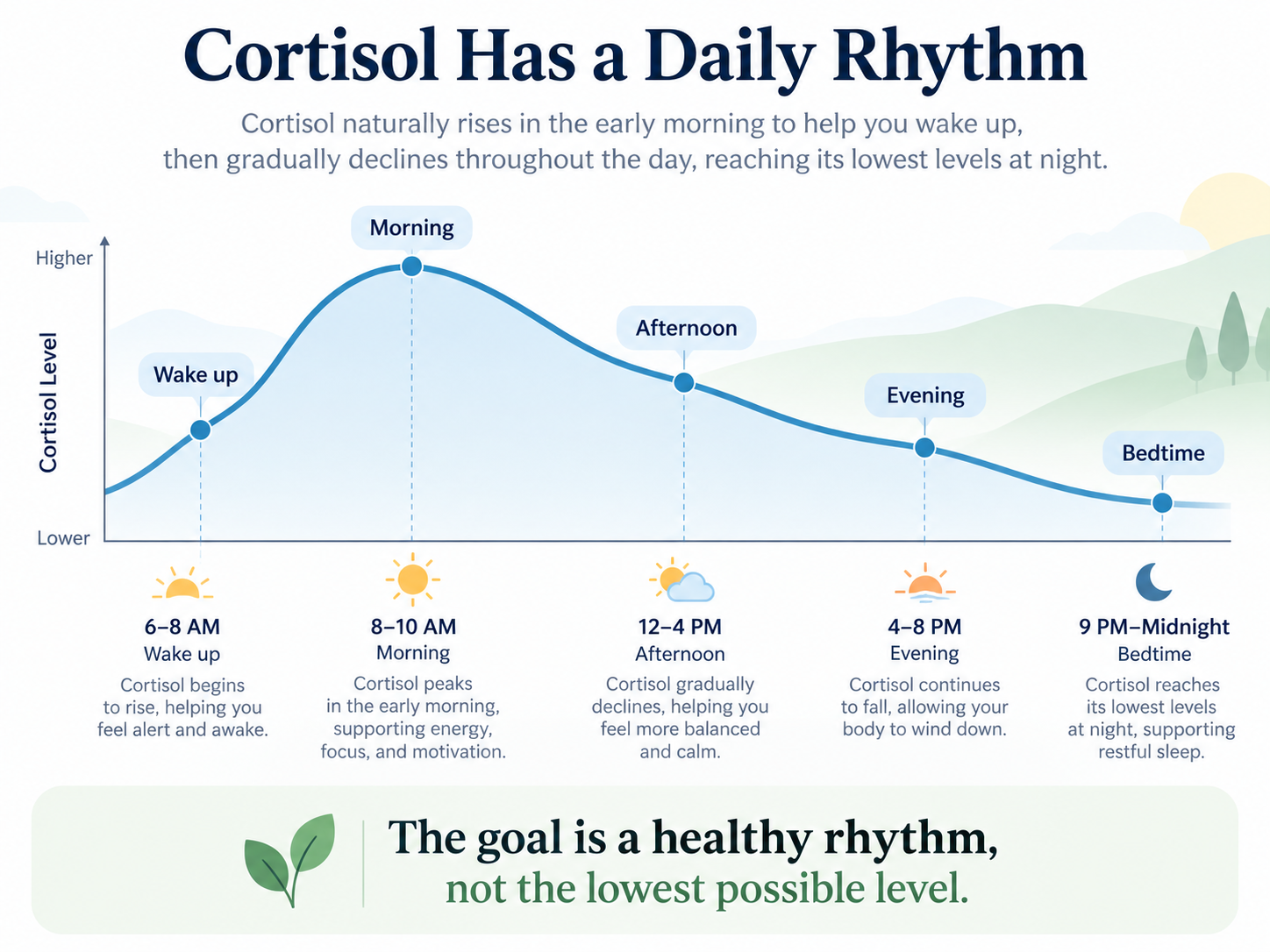
Cortisol also follows a daily rhythm. Levels generally rise around waking, peak early in the day and gradually decline toward evening. That rhythm helps us wake up, stay alert during the day and prepare for sleep at night.
Stress, poor sleep, illness, medications, irregular schedules and many other factors can influence that rhythm. You do not need to “control” cortisol perfectly. What you can do is give your body more opportunities to recover.
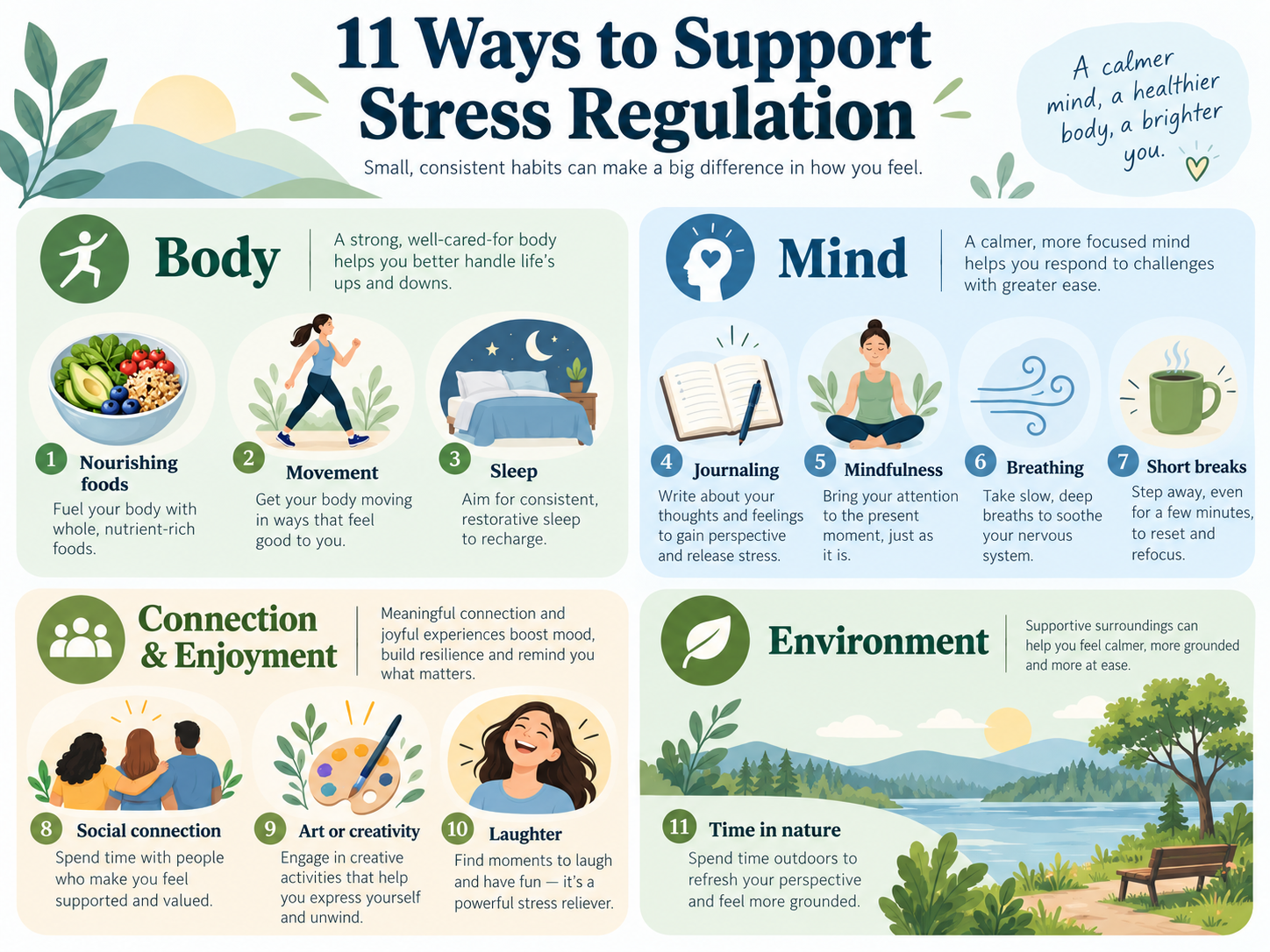
Here are 11 places to start.
1. Focus on Nourishing Foods
There is no single “cortisol diet,” but your overall eating pattern can affect how well your body handles stress. Regular meals that include adequate protein, vegetables, healthy fats and other nutrient-rich foods can help support steady energy and reduce the physical strain that comes from long periods without food or highly erratic eating.
If your diet is dominated by highly processed foods, added sugars and very little nutritional variety, improving the quality of what you eat may support your overall stress response as well as many other areas of health. The goal is not perfection. It is giving your body reliable fuel.
2. Get Moving
Exercise is one of the most useful tools we have for supporting long-term physical and emotional health. Interestingly, exercise itself can temporarily raise cortisol. That is not necessarily a problem. Exercise is a controlled physical stressor, and the body responds accordingly.
Over time, regular movement can improve fitness, sleep, mood, metabolic health and resilience to stress. That does not mean harder is always better. Walking, strength training, stretching, dancing, cycling, swimming and other forms of movement can all be useful. The right amount is the amount your body can recover from.
3. Write It Down
Sometimes stress becomes more manageable when it has somewhere to go. Journaling can help you organize thoughts, identify patterns, process difficult experiences and separate what you can change from what you cannot.
Research on journaling and cortisol itself is mixed, but the practice may still be valuable because stress is not measured by a single hormone. You do not have to write pages. A few minutes answering questions such as “What is bothering me?”, “What part of this can I influence?” and “What can I let go of for today?” may be enough.
4. Try Meditation or Mindfulness
Meditation is not about forcing your mind to become blank. It is a way of practicing attention. That may mean following your breath, noticing physical sensations, repeating a phrase, listening to a guided meditation or simply sitting quietly and observing what arises.
Research suggests mindfulness practices can reduce perceived stress and may produce modest changes in some biological stress measures. You do not need a long practice to begin. Even a few minutes of deliberate attention may help interrupt the constant mental momentum that keeps stress going.
5. Stay Connected
Humans are social creatures, and supportive relationships can change how we experience stress. Talking with someone you trust, sharing a meal, laughing together or simply knowing that someone is available can make difficult situations feel more manageable.
Social connection does not mean having a huge circle of friends. One or two dependable relationships may matter more than dozens of superficial ones. The important question is whether your relationships help you feel supported, understood and connected.
6. Protect Your Sleep
Sleep and the stress system are closely connected. Poor sleep can alter normal cortisol patterns, while stress can make it harder to sleep. Once that cycle begins, each problem can reinforce the other.
A useful starting point is not simply asking, “Am I getting eight hours?” Also ask whether you are sleeping at reasonably consistent times, whether you wake feeling restored, whether you are exposing yourself to bright light late at night, whether you are using caffeine too late in the day, and whether stress is following you into bed. Improving sleep may be one of the most important ways to support a healthier stress response.
7. Make Something
Art, music, gardening, crafts, cooking, woodworking and other creative activities can absorb your attention in a way that gives the mind a temporary break from repetitive stress. You do not have to be talented. The value may come from the process itself.
Some studies have found changes in stress measures after creative activities, although the research is not uniform. You do not need proof that painting lowers cortisol before allowing yourself to enjoy painting. Sometimes doing something absorbing and enjoyable is reason enough.
8. Take a Break
We often treat breaks as lost productivity, but they may be the opposite. Short pauses can interrupt mental fatigue, reduce physical tension and give your nervous system a chance to shift gears.
A break does not have to mean abandoning your responsibilities. Stand up, walk for five minutes, look outside, stretch, drink some water or step away from the screen. The point is to give your system a brief change in demand.
9. Laugh More
Laughter cannot remove the circumstances causing stress, but it can change your experience of them. Research suggests laughter may reduce perceived stress and may influence some physiological stress markers.
More importantly, laughter creates a moment in which the body and mind are doing something other than rehearsing the problem. Watch something funny, spend time with people who make you laugh, and allow yourself to be ridiculous occasionally. Stress is serious enough already.
10. Slow Your Breathing
Your breathing pattern changes automatically when you are stressed, and breathing often becomes faster and shallower. Deliberately slowing the breath may help shift the nervous system toward a calmer state.
You do not need a complicated technique. Try inhaling gently, then allowing the exhale to be slightly longer, and repeat for a few minutes. Slow breathing is not an instant “cortisol hack.” It is simply one practical way to signal that the immediate emergency may be over.
11. Spend Time in Nature
Many people feel different after spending time outdoors. Research supports a relationship between exposure to natural environments and lower perceived stress, improved mood and other measures of wellbeing.
You do not need a wilderness retreat. A park, garden, beach, tree-lined street or even a quiet outdoor sitting area may help. What matters is giving your attention a chance to move away from constant stimulation and toward something less demanding.
The Bigger Picture
None of these strategies is a magic switch, and you do not need to do all 11. The larger goal is to build more opportunities for regulation and recovery into ordinary life.
Stress is unavoidable. What matters is whether your body repeatedly gets the message that the challenge has ended and it is safe to return toward balance. That may come from sleep, movement, connection, breathing, nature, laughter, food, creativity or simply stopping long enough to notice that you have been running at full speed all day.
The best place to start is usually the one change you are most likely to repeat.
A Note from Marsha
I originally wrote this article as a straightforward list of ways to lower cortisol. The more I have researched cortisol, the less comfortable I am with that simple idea. Cortisol is not something we should try to eliminate.
We need it. What interests me now is the rhythm: when cortisol rises, whether it stays elevated when it no longer needs to, and whether our everyday habits give the body enough opportunity to recover.

That is why I created the more detailed How to Lower Cortisol and Restore a Healthy Daily Rhythm Guide.
This Blog gives you practical places to start. The Guide explains how the pieces fit together.
The Wellness Center For Healthy Living
Share This: