Most of us develop familiar food routines. We shop at the same stores, order meals we enjoy, and keep leftovers for another day. When those habits have worked for years, it is easy to assume they will continue working without much thought.
But the risk of foodborne illness involves more than the food’s name or where you bought it. It depends on whether harmful organisms are present, how the food has been handled, and how vulnerable the person eating it is.
Understanding those connections makes food safety more personal and more practical.
The Person Eating the Food Matters
People do not all respond to a foodborne infection in the same way. Adults 65 and older, pregnant people, young children, and people with weakened immune systems are more likely to experience serious illness. Conditions such as diabetes, kidney disease, and liver disease, along with certain treatments and medications, can also increase vulnerability.
This does not mean that everyone in these groups will become sick from a particular meal. It means that the consequences of an infection can be greater, making careful food choices and handling especially worthwhile.
Being tired or stressed is a different question. Feeling run down may make shopping, cooking, and cleaning more difficult, but it does not tell you whether your immune system is impaired or explain why a particular meal caused illness. A healthy person can get food poisoning too. Safe handling remains important on your best days as well as your difficult ones.
Why Familiarity Can Hide the Risk
“I have always eaten it this way” describes your experience, but it cannot establish how the next serving was prepared or stored. One batch may have been chilled promptly while another spent longer on a counter. One meal may have been eaten immediately while another remained in a warm car during errands.
Appearance offers limited reassurance. Harmful bacteria do not necessarily change a food’s smell, taste, or color. A meal can look perfectly normal and still have been handled in a way that increases risk. Smelling leftovers may reveal spoilage, but a normal smell does not establish safety.
The more useful questions concern the food’s history: when was it prepared, how was it kept, and how much time has it spent without adequate heating or refrigeration?
In Hawai‘i, Include the Trip Home
A takeout meal does not remain under the restaurant’s control after you collect it. The drive, additional stops, and time on your kitchen counter become part of its handling history.
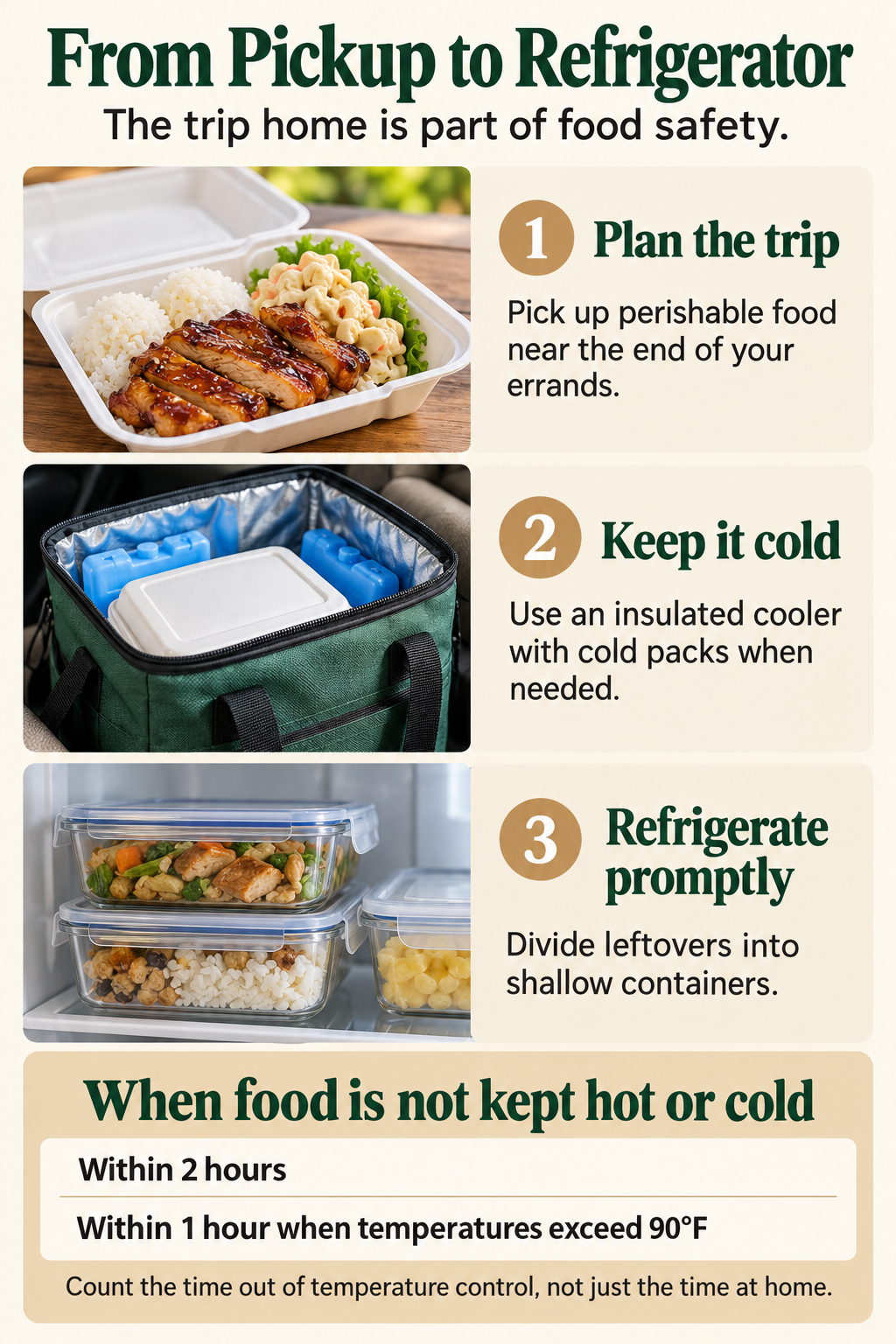
Think about a plate lunch containing cooked meat, rice, and macaroni salad. Buying it before several errands creates a different situation from buying it on your way home and eating or refrigerating it promptly. The important difference is what happens to the meal during that interval.
When practical, collect perishable groceries and takeout near the end of your trip. For cold food that must travel longer, an insulated cooler with sufficient ice or frozen gel packs can help maintain refrigeration temperatures. A cooler bag without a cold source should not be assumed to keep food adequately chilled.
The Two-Hour Rule, and When It Becomes One Hour
Perishable food should be refrigerated promptly and within two hours when it is not being kept safely hot or cold. When the surrounding temperature exceeds 90°F, that limit becomes one hour. A hot car can create those conditions even when your kitchen does not.
Count the time spent out of temperature control during transport, serving, and waiting at home. Putting food in the refrigerator does not erase earlier time on the counter or in the car.
Humidity can contribute to mold, spoilage, and difficulties keeping dry foods dry. However, humidity alone does not trigger the one-hour rule. That shorter limit is tied to temperatures above 90°F.
If perishable food has exceeded these limits, discard it rather than tasting it to decide whether it is safe.