1. Why Heat Is Becoming a Greater Health Concern in Hawaiʻi
In October 2026, Honolulu Civil Beat reported an increase in emergency department visits for heat-related illness across Hawaiʻi. According to Hawaiʻi Department of Health figures cited in the article, the number of reported visits between May and September was:
- 2024: 126 emergency department visits
- 2025: 155 emergency department visits
- 2026: 182 emergency department visits
That's an increase of approximately 44% over two years. But these figures are not a count of everyone whose health was affected by heat. The reporting does not provide a breakdown of heat exhaustion versus heatstroke, and the Civil Beat article does not establish whether urgent-care encounters are included in the underlying figures.
What the numbers may be missing
Some people seek care at urgent-care clinics, primary care offices, or through telehealth. Others are assisted by emergency medical personnel without being taken to a hospital, or recover at home without receiving professional care. These events may not appear in emergency department counts.
Another, potentially more significant issue is that heat can aggravate a condition that is recorded under a different diagnosis. A person might seek emergency care for worsening heart failure, a heart attack, dehydration, or acute kidney injury. If a contribution from heat is not recognized or documented, the encounter may not be identified as heat-related.
The reported series covers only May through September, and represents encounters rather than necessarily unique patients. In addition, variation in diagnostic coding and participating facilities can affect surveillance data.
Reported heat-related emergency visits are not the same as the total number of people affected by heat. The number of missing cases cannot be calculated from the reported counts.
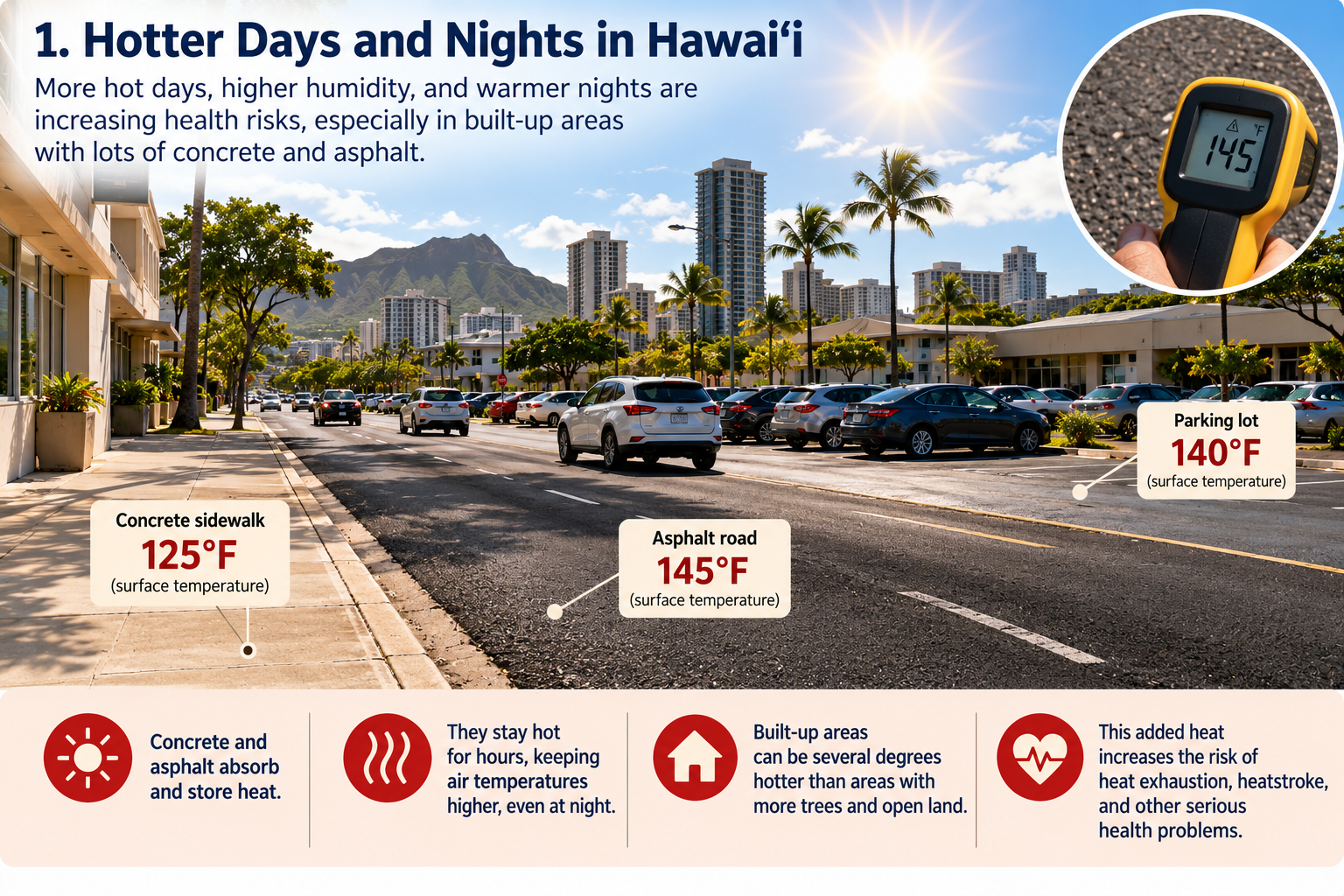
Why asphalt and concrete matter
Trees and other vegetation help cool neighborhoods through shade and evaporation. Roads, parking lots, roofs, and building surfaces absorb sunlight, become hot, and release stored heat later. This contributes to the urban heat island effect. Surface temperatures can be much higher than the surrounding air, but the two measures should not be confused.
A paved neighborhood with relatively little shade may be substantially hotter than a nearby vegetated area, even within the same community.
Humidity adds another challenge
Our bodies cool themselves partly through evaporation of sweat. When humidity is high, sweat evaporates more slowly, making it harder for the body to release heat. Air temperature alone therefore doesn't tell the full story. Humidity, direct sunlight, airflow, physical activity, clothing, and individual health all influence risk.
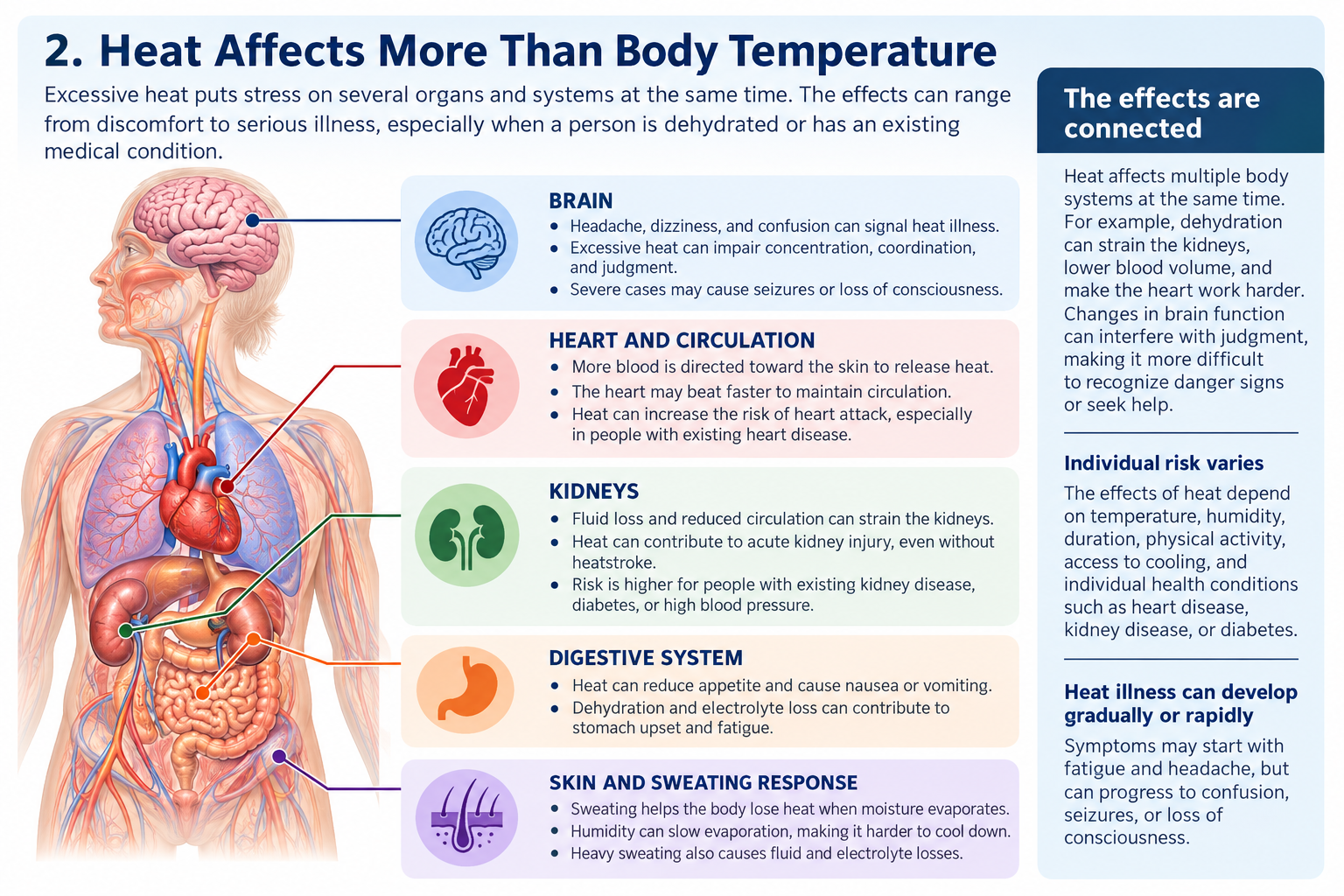
2. What Excessive Heat Does to the Body
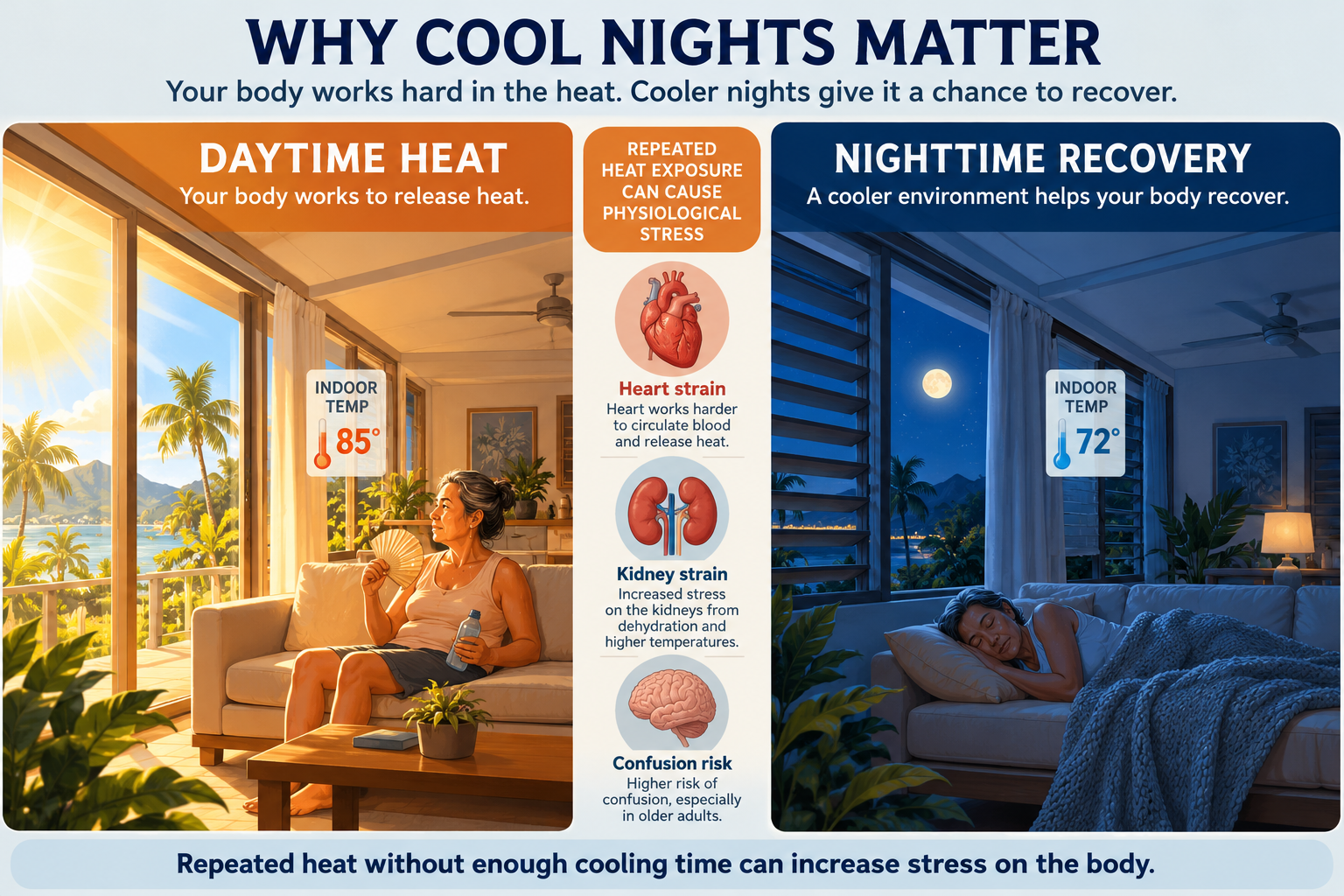
The body regulates temperature by directing more blood toward the skin, adjusting circulation, and producing sweat. These processes are effective under many conditions, but prolonged heat exposure or dehydration can strain several organs at once.